Showing posts with label Reviews. Show all posts

Thursday, 8 November 2018

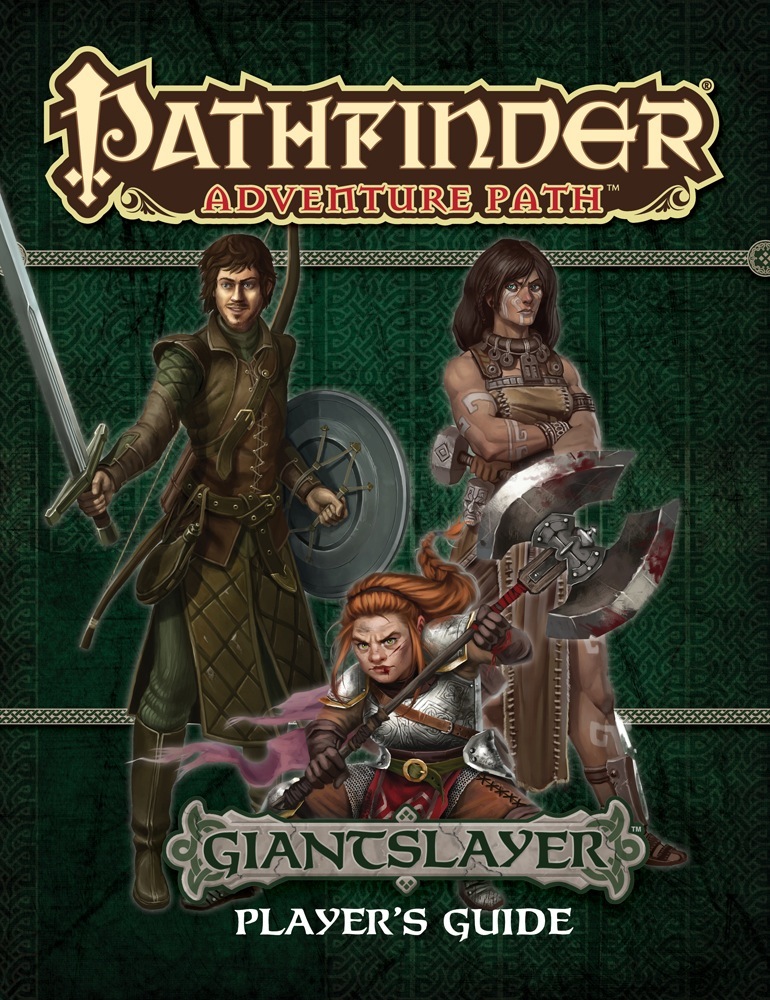
Giantslayer Player's Guide


In order to get an adventure path going, the players need characters, and ideally, they’ll create characters that are suited for the particular adventure path they’ll be undertaking—characters who come from the appropriate region(s), and have relevant skills and abilities. In the case of the Giantslayer Adventure Path, they should come from the town of Trunau in Belkzen or have a reason for being in Trunau, and they should be interested in fighting giants.

The Giantslayer Player’s Guide provides players with the tools they need to create such characters. And it does a reasonably good job. One of the difficulties adventure path player’s guides can encounter is providing enough information to let players create characters appropriate to the entire campaign—not just the opening—while not giving away too much about later parts of the campaign. In the case of Giantslayer, this means making it clear that the PCs will be fighting giants (it’s in the name of the adventure path, so it shouldn’t come as much of a surprise to the players even though it may be to the characters) and that they will be travelling through the Mindspin Mountains.

Like most adventure path player’s guides, the Giantslayer Player’s Guide opens with a brief overview of the campaign. This includes some suggestions on how the characters might already know or come to know each other. It then moves on to some basic character tips, including suggested archetypes, animal companions, bloodlines, favoured enemies, and so on. Since it’s not mandatory that PCs come from Trunau (although it is strongly recommended that at least one come from Trunau), it also includes a section on possible nearby places of origin.

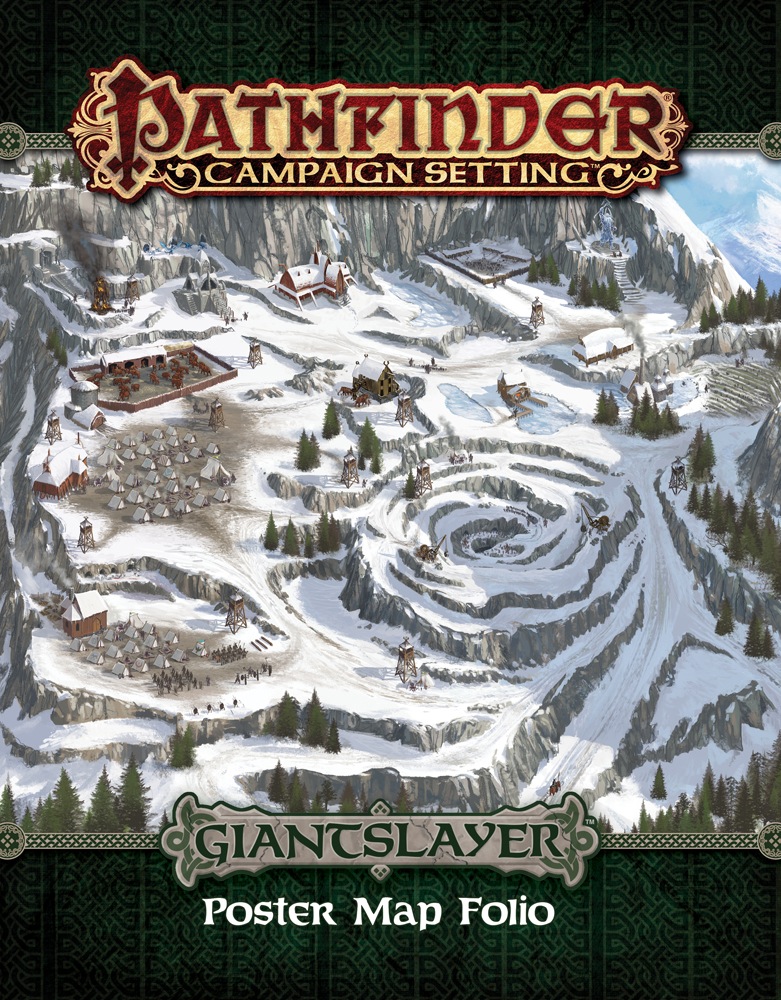
Giantslayer Poster Map Folio


I can never have too many maps in my games. Particularly the big ones. I love unfolding them, laying them out on the table, and pointing to one location or another. I love the context they provide for where things are happening in the game world. And sometimes, they’re just pretty to look at. As such, I appreciate the map folios that come out for each adventure path. They help me get my fix of pointing at maps. They’re also generally useful for any games set in the same region, not just the adventure paths in their name.

The Giantslayer Poster Map Folio is no exception. Like most other adventure path map folios, it comes with three fold-out poster maps, each showing a location relevant to the Giantslayer Adventure Path. The first is a map of Trunau, the town that the adventure path starts in, and where the player characters might call home. The second is a map of the Mindspin Mountains, the region where the adventure path expands into. Trunau is located towards the northeast corner, and from there, it’s possible to trace out the route the remainder of the adventure path takes. Both these maps are useful, functional, and attractive.

The third map in an adventure path map folio tends to be a more artistic piece. Often, it’s a map of a country or region done in the style of a map the characters in the game might actually purchase and use, rather than one designed for gaming purposes. In this folio, it is a map of Skirgaard, the location of the fourth adventure. In this case, it’s more than just a map; it’s also an illustration of the entire village. Skirgaard is a small enough location that it’s possible to not just show where each individual location is, but to also sketch out every location in detail, complete with people moving about and smoke rising from chimneys. The map shows the village from the vantage point of a little bit above and to the south. When PCs arrive at the village, GMs no longer need to describe what they see. Instead, they can just show the map and say, “This is what you see.” The map is breathtakingly beautiful to look at, and I think it’s probably my favourite of all the artistic maps in all the adventure path map folios.

The Giantslayer Poster Map Folio makes a great addition to a Giantslayer campaign, and to any campaign set in Trunau and/or the Mindspin Mountains.

Wednesday, 7 November 2018

Doctor Who - The Tsuranga Conundrum


Doctor Who episodes can run the gamut from serious to funny, dramatic to silly, joyous to sad, terrifying, exciting, emotional—heck, sometimes even a little boring. This isn’t just a change from one episode to the next. Doctor Who frequently mixes many or all these things into a single episode. It doesn’t always work, but when it does, the results can be incredibly fun. And that’s the best way I can sum up “The Tsuranga Conundrum” by Chris Chibnall: fun. It’s fast-paced, tense, funny, silly at points, and just plain fun. I love every moment of it, from beginning to end.

SPOILERS FOLLOW

Thursday, 1 November 2018

Doctor Who - Arachnids in the UK


One thing Doctor Who is well known for is including lots of creepy chills and scares. This week’s episode is the kind that gives the show that reputation. Just in time for Hallowe’en, “Arachnids in the UK” presents us with giant spiders creeping out from under people’s beds, crawling along dark corridors, and spinning lots and lots of webs. It’s the kind of episode arachnophobes might want to avoid. In true Doctor Who fashion, however, the episode also provides moments of humour to soften the terror, and lots of great character moments.

Coming immediately after the incredible heights of “Rosa”, it’s not surprising that “Arachnids in the UK” does not reach those same heights, but it’s still a highly enjoyable episode. Unfortunately, it does have a somewhat weak resolution, which can make it feel a bit disappointing, especially in comparison to “Rosa”. However, the resolution aside, the episode has many great strengths, particularly the initial build-up of threat and the characters, which include our first introduction to Yasmin’s family. Overall, I’d say it’s my least favourite episode of Series 11 so far, but considering how strong the series has been, this does not make it a bad episode at all.

SPOILERS FOLLOW

Sunday, 28 October 2018

Aching God


Disclaimer: I received a free copy of this novel from the author in return for an honest review.

Fantasy can be a genre in which it’s difficult to stand out. There’s a lot out there, both good and bad, and a lot of it can be very similar, following the same basic tropes and formulas. Indeed, it’s often expected to follow those tropes and formulas. Aching God is a novel with many of the usual trappings of fantasy, particularly those established in roleplaying games like Dungeons & Dragons and Pathfinder. It involves a quest (perhaps the most iconic trope of fantasy). There is lots of magic, some of which is practised by sorcerers who have different kinds of specialisations. Other magic is used by followers of the various different gods, who grant their priests spells that can heal or protect. While there are many gods, their worshippers tend to follow one solely rather than worship them as a pantheon. The world also has warriors and roguish types, and of course there are monsters and other kinds of threats and challenges for the heroes to face.

I will confess, it took me a little while to get into the book because, at first, there didn’t seem a lot to differentiate it from all the other very similar fantasy out there. However, it wasn’t all that long. After a couple of chapters, the book begins to establish its own identity as we begin to learn a bit more about the world. By around the fourth chapter or so, I was hooked.

Wednesday, 24 October 2018

Doctor Who - Rosa


When Doctor Who began in 1963, its original purpose was to be an educational adventure series to teach children history and science. It soon drifted away from that purpose. Over the years, it has tackled a variety of different types of stories, subjects, genres, and styles, though a focus on adventure has always remained. And during those years, some periods or individual episodes have stood out more than the others. This week’s episode is one of those.

I have loved Series 11 so far. It’s brought back a thrill for watching Doctor Who that I haven’t felt in a long time. “The Woman Who Fell to Earth” and “The Ghost Monument” are both great episodes, and I stand by that. But “Rosa” blows them both away. It is, quite simply, one of the best Doctor Who episodes ever.

It’s also an episode that quite firmly returns to that original purpose to be educational. Doctor Who has often set stories in historical time periods, but “Rosa” is a kind of historical the show hasn’t done in a long time. In the first couple years, it was relatively common for stories to be what have come to be called “pure historicals”. Stories like “Marco Polo”, “The Aztecs”, and “The Reign of Terror” not only took place in historical times, but also involved no science fiction elements beyond the Doctor, his companions, and the TARDIS (and the TARDIS was only involved as a means of landing them there and taking them away at the end). There were no aliens, no other time travellers trying to change history, no fantastical elements of any kind.

By the end of William Hartnell’s time as the first Doctor, the pure historical stories were already becoming less frequent, replaced in favour of science fiction action stories. Patrick Troughton’s second Doctor only had one pure historical, his second story, “The Highlanders” in late 1966. The next pure historical wasn’t until 1982’s “Black Orchid” with Peter Davison’s fifth Doctor.

And there hasn’t been one since.

However, over the years a type of story now often referred to as a “pseudo-historical” started to appear occasionally—a story set in some period of history, but which also included science fiction elements such as changing history (like “The Time Meddler” from 1965) or aliens (“The Time Warrior” from 1973). The degree of focus given to the period can vary, but it is always at least part of the backdrop.

Since 2005, one form of historical story that has become popular is the “celebrity historical”, which not only takes place in the past, but also involves some well-known figure from that time, like Charles Dickens in “The Unquiet Dead” or Agatha Christie in “The Unicorn and the Wasp”. However, all the celebrity historicals since 2005 have also been pseudo-historicals.

Rosa” is not a pure historical. However, it is the closest Doctor Who has come to one since “Black Orchid”. While it does have science fiction elements, they are minimal, and the historical story of Rosa Parks remains at the forefront. Obviously, however, it is a celebrity historical.

Rosa” is not an easy episode to watch. It will make you uncomfortable (at least, I hope it does). It’s designed to make you feel uncomfortable. It shows a frank and brutal depiction of Montgomery, Alabama in the 1950s, pulling little in the way of punches, apart from softening some of the language to keep it viewable by children. It is definitely the most real historical the show has had since 2005, possibly that it has ever had. It powerfully depicts the reality of the racism that existed at the time, while also reminding us of the racism that still exists today. It offers hope for a better future, while also reminding us that we have to remain vigilant and that change takes work. The world we live in today may be better in some ways than it once was, but it’s not perfect.

Tackling a sensitive topic like Rosa Parks and the rise of the Civil Rights Movement in the United States is not an easy task for any show, but especially for a show like Doctor Who which deals frequently with time travel and manipulation, and that has a white lead character. It could easily go very wrong—easily become a “white saviour” story (a story in which a white character rescues people of colour from their plight).

Of course, as a white person myself, I am not really the most qualified to evaluate how well “Rosa” succeeds in presenting its material with sensitivity, and how well it avoids potential problems. As such, before writing this, I made a point of checking out what several black Doctor Who fans on Twitter (including , , and ) had to say. On the whole, their responses have been very positive. The thoughts and opinions in this review are my own, but I have tried to measure my opinions with those of the people most affected.

It should be noted, too, that “Rosa” is written by Malorie Blackman (with a co-credit by Chris Chibnall), who is the first person of colour ever to write for Doctor Who. The fact that Doctor Who has taken so long to have a non-white writer is rather depressing, and it is perhaps appropriate that Blackman write an anti-racist story at this time, as Doctor Who struggles to break down its own systemic barriers.

SPOILERS FOLLOW
Sunday, 21 October 2018

Doctor Who - The Ghost Monument


When I was young, I got a unique thrill out of watching a Doctor Who episode for the first time. It was always there, even if the episode wasn’t particularly good. The show just excited me in a way that’s difficult to express—a way that just didn’t happen with any other show. This is not to say no other show or movie could thrill me. Many did, just not in the same way. Doctor Who’s thrill was something very different. When Doctor Who returned in 2005, that thrill returned with it, and it stuck around through Series 1 through 4.

Sometime during Series 5, that thrill began to diminish and eventually vanished altogether. I was becoming more and more dissatisfied with Doctor Who. I still enjoyed the show, but it no longer seemed to have that quality that—for me—elevated it above other shows. It was actually one of the things that eventually motivated me to start this blog—so I could organise all my scattered thoughts in one place.

Over the next few years, that thrill didn’t return (except maybe for “The Day of the Doctor”), even when I thought the show was getting a lot better again. As much as I really liked Series 10, that thrill still didn’t return. To be honest, I had pretty much forgotten the thrill had ever existed.

However, last week, about midway through watching “The Woman Who Fell to Earth” for the first time, I suddenly realised I was feeling that thrill again, and it produced a moment of joy unlike any I’ve felt for a long time. I didn’t mention it in my review of “The Woman Who Fell to Earth” because, honestly, I was a little afraid it would go away again. However, I am thrilled (I use that word deliberately) to say that it was still present for the most recent episode, “The Ghost Monument.” Of course, there’s always the possibility that things could completely turn around again, but having that thrill there for two episodes in a row is a pretty big thing, and worth celebrating.

Now comes the difficult part of analysing just what it is that creates that thrill for these episodes, and not for the last several years. But I think I’m up for the challenge.

The Ghost Monument”, once again written by Chris Chibnall, is a wonderful episode that mixes tense excitement with heartfelt character moments, some humour, and a touch of creepiness. Jodie Whittaker has settled fully into the role of the Doctor and simply excels. The Doctor’s companions friends (I’m having difficulty getting used to the change of terminology) are similarly great, particularly Ryan and Graham, as are the guest cast. It also looks visually breathtaking, with incredible alien vistas and impressive special effects. On the whole, I like this episode even more than “The Woman Who Fell to Earth’, although I also feel it has more issues than last week’s episode.

SPOILERS FOLLOW

Wednesday, 10 October 2018

Doctor Who - The Woman Who Fell to Earth


It’s a bit of an oxymoron, but change is one of the few constants on Doctor Who. There are very few other shows out there where after just a year or two, the entire cast might be completely different. Companions come and go; the Doctor regenerates. The people behind the scenes, from writers to producers, change too. The new people bring with them new ideas, new styles, and new aesthetics. Sometimes there might be little to no change in the cast and crew, but the current people working on the show simply decide to do things differently. Even one episode to the next can bring marked changes. It’s simply a matter of fact that change is ingrained into the very structure of Doctor Who. It has been since the second season in 1964 when the Doctor’s granddaughter Susan left the show and the cast changed for the first of countless times.

One of the great things about this is that is that it allows Doctor Who to be so many different things to so many different people. If the current version doesn’t have what you’re looking for, you know it’s only a matter of time before it changes and maybe the next version will have what you want. It’s one of the things that have kept the show going for so long.

Doctor Who has changed again. And this time, it’s one of the bigger changes. Not only is there a new Doctor (who also happens to be the first female Doctor), there are also three new companions, a new showrunner, new writers, a new music composer, and quite a lot else new both in front of and behind the cameras. Oh, and there are new cameras too, a new aspect ratio, and a completely new look. Indeed, this is probably the biggest change since 2005 when Doctor Who came back after sixteen years off the air.

The changes this time also bring with them the perfect jumping on point for new (and lapsed) viewers. Doctor Who can be an intimidating programme to come into if you’ve never seen it before. With nearly 850 episodes produced over 55 years, there’s a massive backlog of history and (often contradictory) continuity that can seem overwhelming. But the simple matter is, you don’t need to see all that. Over the years, the show has had numerous spots where new viewers can easily start in without having to worry about anything that’s come before. That’s the case this year. The show is starting afresh. There are no returning plot-lines, villains, or monsters from previous years. Everything is completely new. The show hasn’t forgotten what came before, but it’s not relying on its past.

It’s been a bit of a wait since the last series. Not sixteen years, obviously, but it has been fifteen months since Series 10 ended. Jodie Whittaker was announced as the thirteenth Doctor just after that on 16 July, 2017, and she made her début in the closing moments of last December’s Christmas special “Twice Upon a Time” when Peter Capaldi’s twelfth Doctor regenerated into Whittaker’s thirteenth.

So, with all the changes, was the wait worth it?

The answer is unequivocally yes.

The Woman Who Fell to Earth” by Chris Chibnall is not a perfect episode (if such a thing even exists). I have criticisms of it (which I will get to in due time), but overall, I absolutely love it. It is an easily accessible episode with great, relatable characters, a lot of emotion, and more than a few thrills. The plot is fairly simple and straight-forward, allowing it to focus on introducing the new characters and to ease viewers into the world(s) of Doctor Who.

One thing people who have seen recent series of Doctor Who will almost certainly notice very quickly about this episode is how grounded it is. Former showrunner Steven Moffat aimed for a “fairy tale” style to the show. It was high fantasy (in a science fiction framework) with fantastical plots and fantastical characters. New showrunner Chris Chibnall’s newest iteration of Doctor Who has obviously not dispensed with fantastical elements entirely, but when I say that it is more grounded, I mean that it focuses more on setting the fantastic amidst a backdrop of realism. There’s a greater focus on showing the everyday lives of the characters and developing them as people viewers might actually meet. The opening scenes show the characters dealing with real-life concerns and issues before involving them in the plots of aliens. And even once the aliens show up, it never loses touch with that sense of reality.

One way it achieves this is through the use of something that I have sorely missed in recent years on Doctor Who (and long-time readers of my reviews will be familiar with me mentioning on many occasions): consequence. Actions have effects that reverberate into people’s lives and change them. People also die in this episode. And they stay dead. There’s actual tension as a result, and the alien menace feels like a real threat.

But there’s humour and fun in the episode too. The humour is more subdued than recent years. There are fewer witty quips, notably. However, there are still quite a few very funny moments, and while the episode does get a bit dark (not just visually, although much of it is set at night, so visually too) and bleak at times, there are light-hearted moments, too, helping to keep a sense of fun.

A lot of that fun comes from the Doctor herself. Jodie Whittaker is absolutely wonderful. She has great presence and energy. Within moments of her first appearance, she establishes herself in the role. There is no doubting that she is the Doctor.

There are a lot of great things to be said about her companions too, and the actors who play them. And the specifics of the story. And so much more.

Also a few quibbles.

SPOILERS FOLLOW
Saturday, 25 August 2018

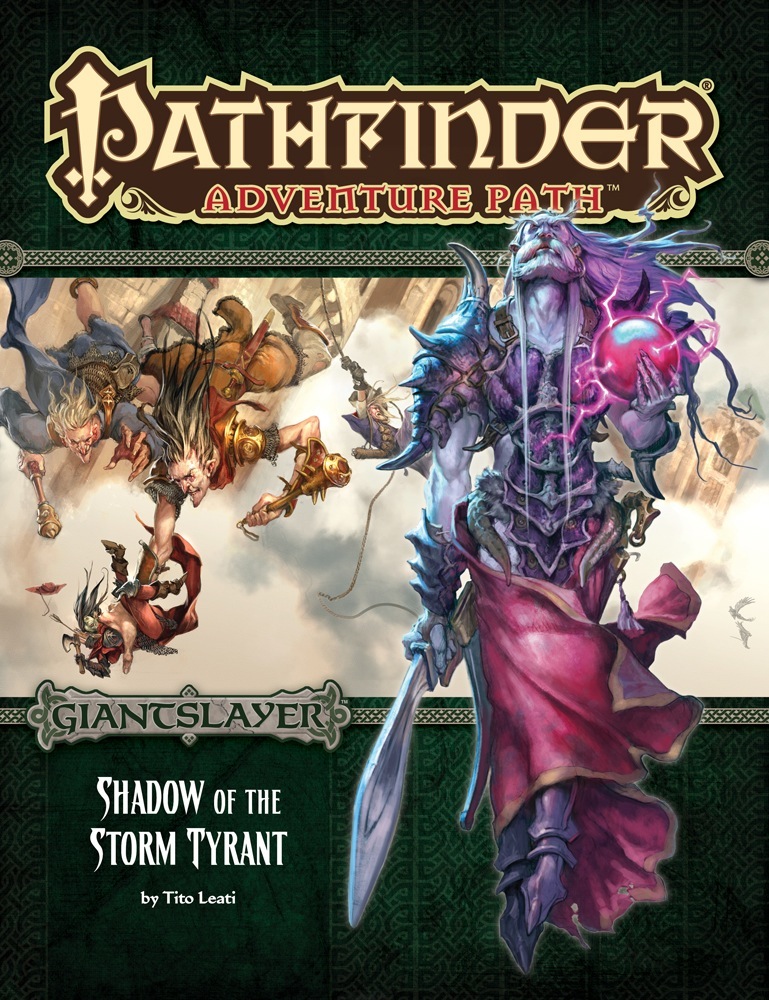
Giantslayer - Shadow of the Storm Tyrant


Throughout the Giantslayer Adventure Path, the player characters have taken on the servants of Volstus, the Storm Tyrant and the forces they’ve been building in the Storm Tyrant’s name. In Shadow of the Storm Tyrant by Tito Leati, the PCs finally make their way to the Storm Tyrant’s cloud castle and take the battle directly to him.

I’ve had mixed opinions of the instalments of Giantslayer so far—some have been good, others not so good—but Shadow of the Storm Tyrant works well as the culminating adventure. It’s primarily a dungeon crawl, but has a good sense of urgency and variety that its predecessor, Anvil of Fire, is missing. It also has some epic-feeling encounters and combats appropriate for a high-level party, and it makes good use of its setting, which helps to turn what could have been just a bog-standard dungeon crawl into something much more unique.

SPOILERS FOLLOW

Friday, 24 August 2018

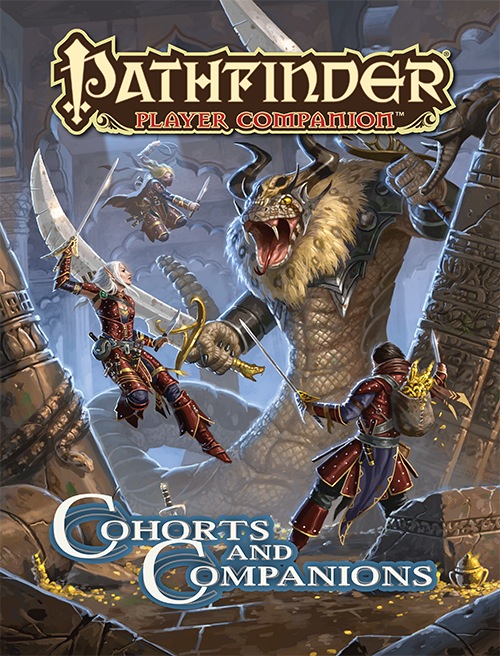
Cohorts and Companions


While conflict with villains and monsters is a significant part of any roleplaying game, the game would be considerably less interesting if the PCs didn’t have friends and allies as well. Whether they’re a local inn-keeper providing the PCs a room to sleep in or a loyal cohort who accompanies the PCs on their adventures, these friendly characters help fill out the rest of the world and provide variety beyond evil and/or monstrous opponents. Pathfinder Player Companion: Cohorts and Companions focuses on the followers and allies who aid the PCs in various ways throughout their adventuring careers.

As the book’s name implies, cohorts (gained from the Leadership feat) are a significant focus, but the book also goes considerably beyond these. The “Companions” part of the title can refer to animal companions, but also to pretty much any other person, animal, monster, or even object that in some way accompanies or aids the PCs—and there is quite an impressive breadth of options covered.

The book opens with a two-page discussion about why NPCs might follow PCs, and how PCs might go about gaining followers. This includes things like hiring NPCs as well as NPCs just following along for their own reasons. Naturally, there’s a fair amount of discussion about the Leadership feat, as well as mention of the variant Leadership feats that can be found in other products: Squire from Knights of the Inner Sea, Torchbearer from Dungeoneer’s Handbook, and Vile Leadership from Champions of Corruption. There is also a very good sidebar on “Who Controls Cohorts?” which discusses how to decide whether the GM or player (or a combination of both) gets to control cohorts’ actions.

Monday, 13 August 2018

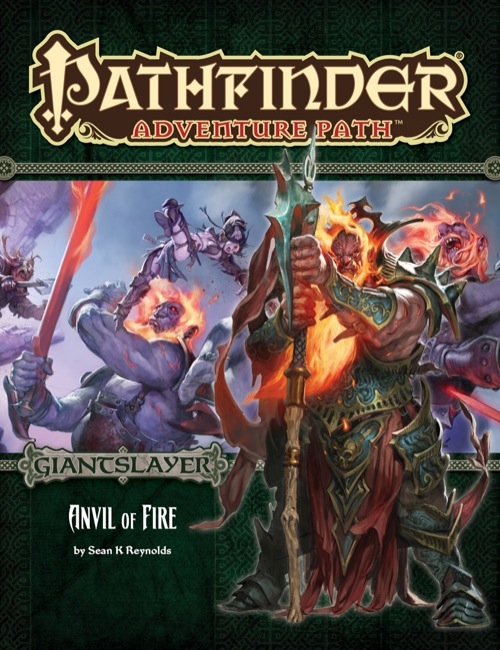
Giantslayer - Anvil of Fire


Every adventure path has a low point. It’s pretty much unavoidable. There’s always going to be something that doesn’t work quite as well as everything. Of course, the hope is that any low points are still high—still good and fun, just not quite as high as the other points in the adventure path. If this situation is met, you have a winning adventure path. Unfortunately, Giantslayer isn’t an example of this. Even more unfortunately, its low point sinks especially low.

After Ice Tomb of the Giant Queen, I worried that the adventure path was becoming repetitive. Three instalments in a row all follow a very similar style where the PCs need to infiltrate much larger and potentially overpowering forces in order to achieve their goals. I worried that this repetition could start to bore the players. Anvil of Fire by Sean K Reynolds, the fifth part of the adventure path, is only superficially similar in this regard and mostly breaks from the pattern established in the last three parts. Unfortunately, it’s repetitive in an even worse way: with itself.

Anvil of Fire is one long dungeon crawl with battle after battle after battle—with almost every encounter being virtually identical to the one immediately before it. There is very little opportunity for pause (except if and when PCs decide to retreat from the dungeon to recover) and even less opportunity for interaction with NPCs in any way other than combat. There is so much of the same in this adventure, I can’t imagine any group of players not being completely bored by the end. Even the most avid “hack’n’slash” players will likely be dismayed at the lack of variety in the combats.

SPOILERS FOLLOW

Tuesday, 31 July 2018

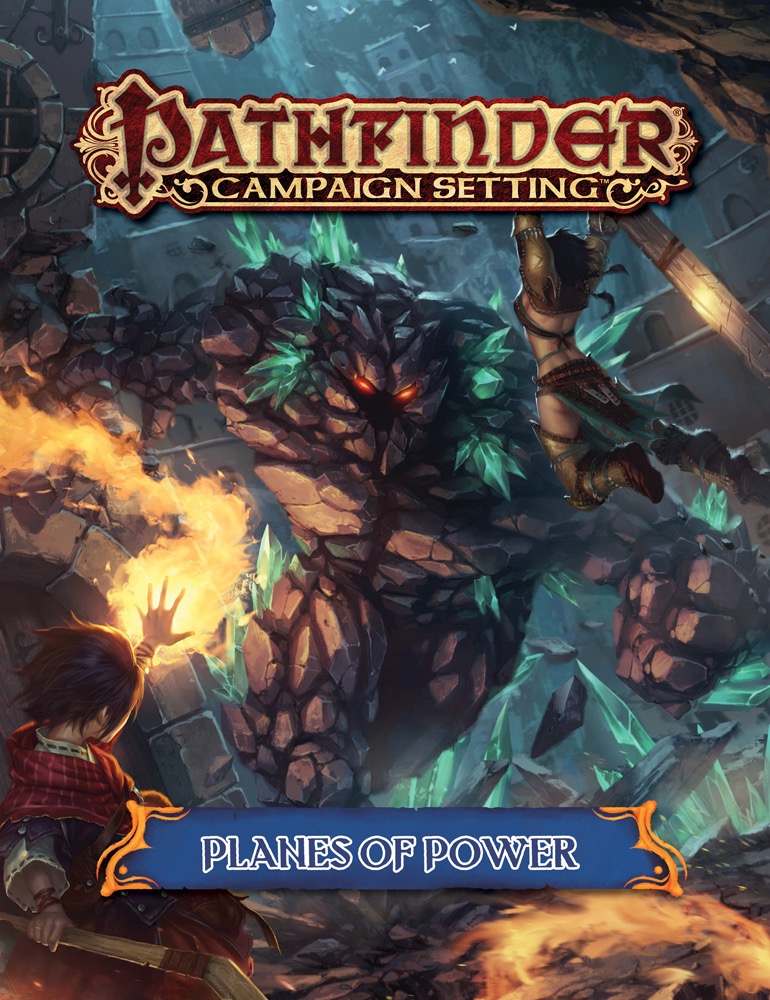
Planes of Power


Fantasy roleplaying games allow an escape from reality. They allow us to play out stories with magic, elves, and dragons that could never happen in the real world. Yet they retain elements of the real world, often taking aspects of real world history and cultures to inspire the peoples and societies that populate them. These elements allow the game to retain a certain sense of familiarity, and a certain sense of reality amidst the fantasy.

But sometimes, you just want to abandon reality altogether, get rid of the familiar as much as possible, and create something truly different. This can be through travel to other worlds or even other planes. Planar travel has been a mainstay of roleplaying since its earliest days. It’s often something only embarked upon by high-level characters who have acquired the greater powers needed to make the jump from one plane to another, but it doesn’t have to be. The old 2nd Edition Dungeons & Dragons campaign setting, Planescape made PCs natives of other planes and incorporated plane-hopping right from first level.

The Pathfinder Campaign Setting first outlined its planar structure in the old Pathfinder Chronicles: Campaign Setting book (later updated as Pathfinder Campaign Setting: The Inner Sea World Guide). The information in that book was later expanded upon in The Great Beyond. But even that book could only provide the barest details. The planes are more than just other worlds; they are entire other universes with enough space in each one to hold millions of entire campaign settings.

Planes of Power is a more recent book that takes a much closer look at just four of the many planes that make up the Great Beyond—specifically the Elemental Planes of Air, Earth, Fire, and Water. Of course, this book can still only scratch the surface of these planes, but it is able to provide enough of a backdrop to whet GMs’ creative juices and allow them to expand beyond what’s presented.

Monday, 30 July 2018

All the Birds in the Sky


What is the difference between science fiction and fantasy? The two are often grouped together. Fans of one are usually fans of the other as well, and indeed the two often overlap. Much that is labelled science fiction contains things that are outright fantastical. The Star Wars series is one of the most extreme examples of this. Called science fiction, it follows the formula of epic fantasy, complete with wizards (jedi), monsters, and heroes fighting the forces of evil. It uses the trappings of science fiction (spaceships, faster-than-light travel, lasers), but without any actual science behind them. The reverse happens as well, with many fantasies containing scientifically plausible ideas. So where is the line between the two? Does that line even really exist?

All the Birds in the Sky by Charlie Jane Anders plays around with the separation between science and fantasy. It jumps back and forth from one side to the other of that hard-to-define line, all the while effortlessly deconstructing the idea that there’s even a line in the first place, demonstrating that, in the end, both science fiction and fantasy are just story-telling.

It does this for more than just science fiction and fantasy, too. It tears apart the lines between comedy and serious drama, being both hilarious and deadly serious, fun and emotional. There are moments of action that wouldn’t be out of place in a Transformers movie, while also being a book about normal everyday life, from children dealing with bullies at school to the sex lives of young adults. Indeed, the book defies most attempts to slap a genre of any kind on it, and it is all the more delightful because of it.

It even defies expectations on a meta-textual level. The book is written in third person limited (meaning it focuses on the point of view of one character at a time), alternating chapter-by-chapter between its two protagonists. Except every once in a while, when the two characters are together, the perspective switches back and forth between them from one paragraph to the next. On other occasions, the perspective widens out to other characters. Even though this can be unexpected (third person omniscient is rarely used these days), it’s never jarring. Anders makes it seem completely normal and natural—she makes you think you were expecting it.

Friday, 27 July 2018

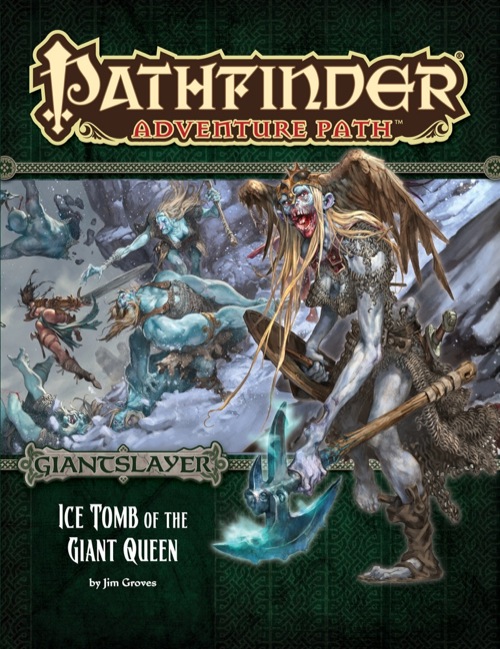
Giantslayer - Ice Tomb of the Giant Queen


Every adventure path has a particular theme and style to it, which identifies it and makes it distinguishable from other adventure paths. Iron Gods has technology and aliens, while Mummy’s Mask involves exploring ancient tombs and battling undead. Giantslayer, not surprisingly, is all about giants. Adventure paths also need a certain amount of variety, though, as too much of the same thing can start to feel stale. Stray too far from the core concept, however, and the different segments of the adventure path might no longer feel like a connected whole. It can be a fine line between how much “same” and how much “different” an adventure path needs to work.

With Giantslayer, I’m starting to feel that it’s leaning towards too much of the same. The fourth instalment, Ice Tomb of the Giant Queen by Jim Groves is structurally very similar to the two adventures immediately preceding it, The Hill Giant’s Pledge and Forge of the Giant God. That’s not to say that Ice Tomb is a bad adventure. It’s actually pretty good and there’s a lot I like about it, but in it, the PCs must undertake a mission of infiltration and sabotage just like they’ve done twice already. Of course, as they’re higher level now, they have more options for how to go about their mission and they face more powerful opponents, but in the end it still feels repetitive. It’s exacerbated by the fact that this is not just the third time overall, but the third time in a row.

That aside, there’s a lot that’s very good in Ice Tomb of the Giant Queen. It has a dynamic and vibrant setting that provides a good sandbox location for the adventure to take place in, and it has lots of interesting encounters to challenge a party of 10th-level characters and entertain their players. It also has an innovative system for determining how their giant opponents respond to the PCs’ actions.

SPOILERS FOLLOW

Tuesday, 10 July 2018

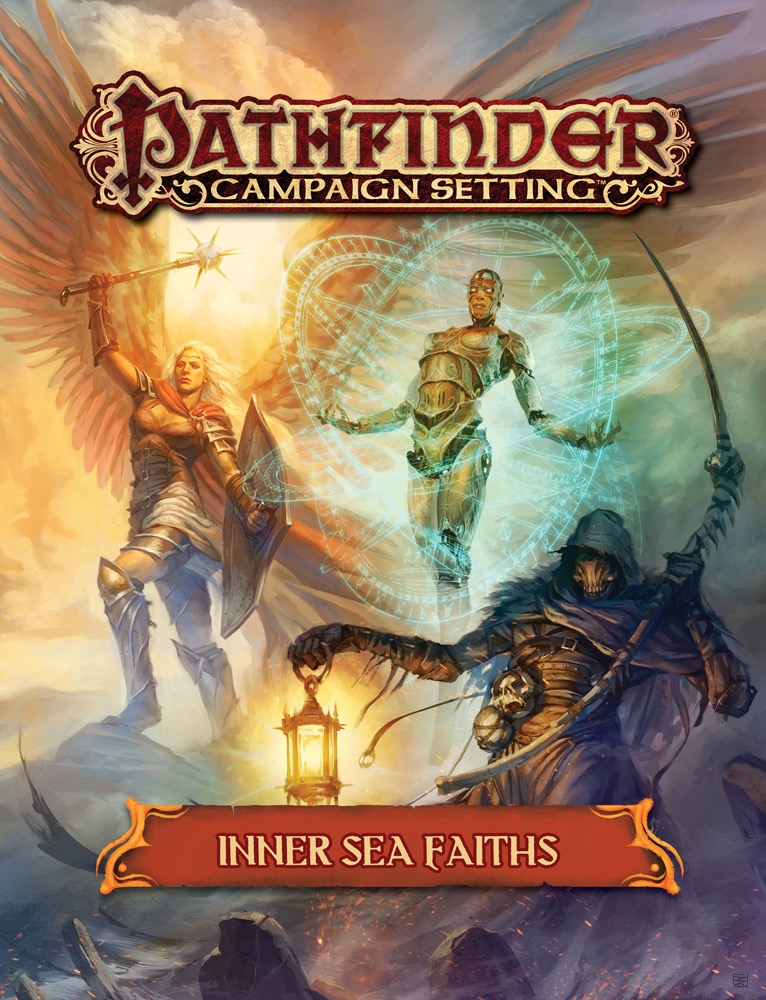
Inner Sea Faiths


Clerics have always been one of my favourite classes. I like getting into the mindset of people who devote their lives to serving greater powers. As such, I also love books that focus on those powers—what their religions are like and what drives their followers. One of the most-used Pathfinder books in my games (apart from the central rulebooks) is Inner Sea Gods, which provides detailed information on the core 20 gods of the Golarion setting (along with additional character options).

However, Golarion has considerably more than just 20 gods. Inner Sea Gods contains details on many of the others, but no book has unlimited space, so these additional details are understandably brief—half a page at most, and often no more than a single paragraph. Some of these additional gods have received more detailed write-ups in other sources, such as volumes of Pathfinder Adventure Path, but ever since Inner Sea Gods came out, I’ve hoped that there would eventually be another book that would collect together these other gods into one place.

Inner Sea Faiths is just such a book. It provides details on 15 of the lesser-known gods of Golarion, such as Brigh, Hanspur, Kurgess, and Sivanah. All 15 are given write-ups in the same style as the ones for the core 20 gods in Inner Sea Gods. Inner Sea Faiths is not as big a book as Inner Sea Gods. The write-ups are 6 pages long each instead of 8, and it doesn’t contain any new prestige classes, magic items, spells, etc. It’s also not a hardcover book. However, it is still a bigger book than most in the Pathfinder Campaign Setting line—96 pages long instead of the standard 64.

Tuesday, 3 July 2018

The House on Hook Street


I love roleplaying adventures that fully integrate into their settings and make full use of those settings. Generic adventures that can take place anywhere are not necessarily bad (and there are certainly many very good ones), but there is something special about an adventure that can’t easily take place anywhere other than where it’s set. The setting helps add to the adventure’s flavour, and can make the adventure more memorable than one with a generic setting.

The House on Hook Street by Brandon Hodge is such an adventure. Set in the Bridgefront neighbourhood of the city of Korvosa, it makes heavy use of concepts and rules from Occult Adventures, and brings to life one of the poorest, most poverty-stricken places in the Golarion setting. It would be possible to use The House on Hook Street with a different campaign setting, but to do so, you would pretty much need to transplant the entirety of Bridgefront (and with it, much of the rest of Korvosa) into the other campaign world. You could change the names of Bridgefront and the locations in it, but it would still be essentially the same place. Without its setting, The House on Hook Street would be a very different adventure.

Of course, the setting is only one part of a successful adventure. A good adventure also requires an exciting plot with interesting encounters and villains, and The House on Hook Street certainly has these. It embroils the PCs in a tale of drugs and lucid dreaming, and brings them into conflict with creatures of nightmare. It can be difficult to do horror effectively in a roleplaying adventure, but while The House on Hook Street isn’t strictly horror, it does contain some incredibly creepy moments that may strike fear in even the hardiest of heroes.

It is a complex adventure, and GMs should be sure to have read and reviewed it thoroughly before play, but it’s one of the best adventures I’ve seen in a while.

SPOILERS FOLLOW

Monday, 25 June 2018

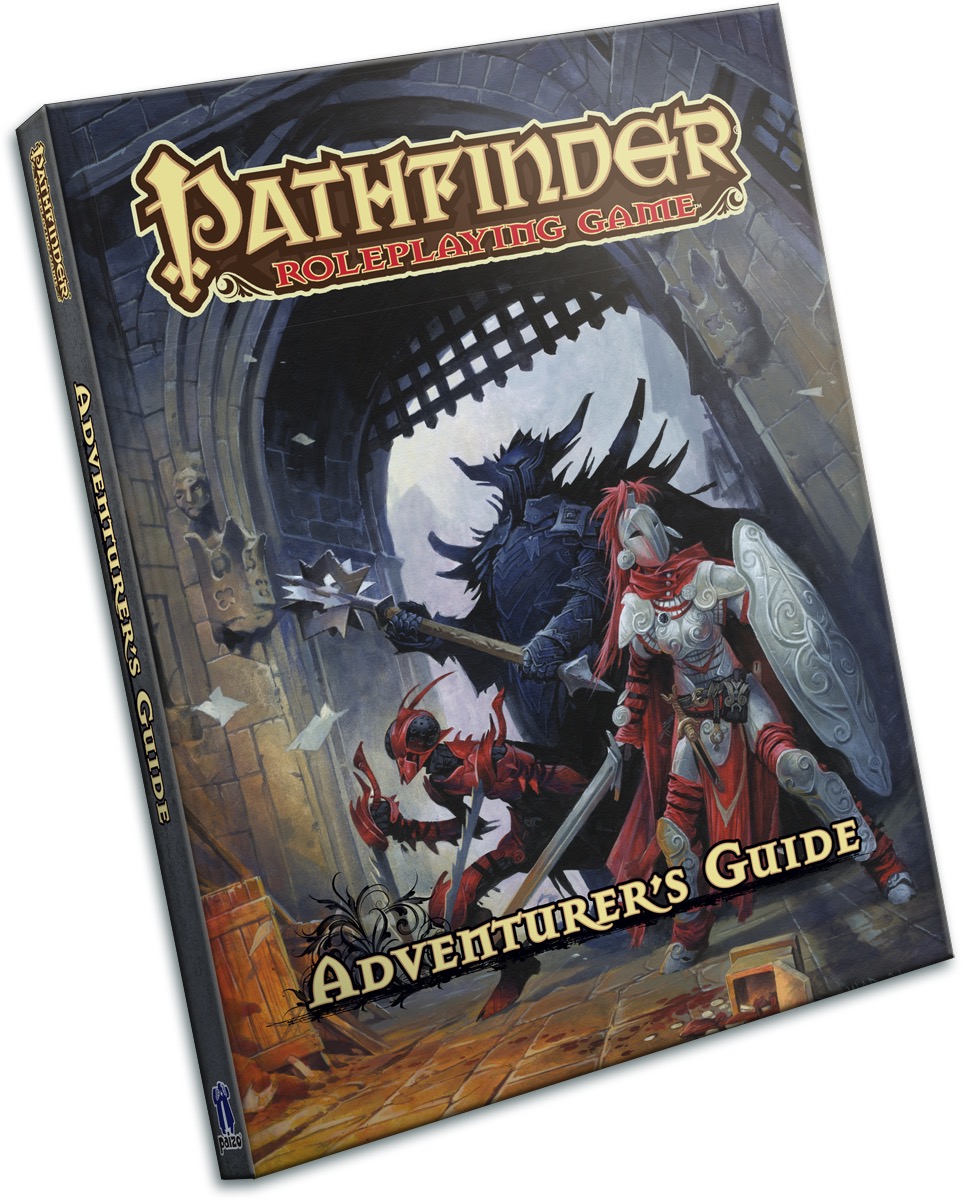
Adventurer's Guide


One of the best ways to make new mechanical game content stick out and be memorable is to attach it to creative flavour content. In a game like Pathfinder, which has a massive plethora of options published over numerous books, this has pretty much become a necessity. This is one of the principal reasons I adore Adventurer’s Guide so much.

When Adventurer’s Guide first came out last year, there was some controversy over the fact that it contains Golarion-specific content. Previously, most books published as part of the hardcover Pathfinder Roleplaying Game line have been setting-neutral (apart from a few minor things like the names and domains of gods). Golarion material was limited to the other Pathfinder lines like Pathfinder Campaign Setting and Pathfinder Player Companion. In this way, GMs could use Pathfinder Roleplaying Game books with any setting (whether Golarion, some other published setting, or one of their own creation) without having to make any adjustments.

However, more recent books from the year or so have started to contain more Golarion-specific content. Occult Adventures contains references to the multiverse structure used in Golarion products rather than a more generic planar structure like that used in the earlier GameMastery Guide. Adventurer’s Guide goes even further, presenting eighteen organisations all taken from the Golarion setting. The book is pretty much tied completely to the setting.

Many people, particularly those who don’t use the Golarion setting, were not happy with this change. They felt the book should have been published as part of the Pathfinder Campaign Setting line (which has had several hardcovers published for it, including The Inner Sea World Guide, Inner Sea Gods, and Inner Sea Races). While I do understand why people might feel this way, personally, I like the change. I fully admit to a certain amount of bias here as I use the Golarion setting for my own games, and I’ve always preferred setting content over generic rules options. But I also fully believe the best mechanical content is generally that which is also attached to flavourful content. It isn’t strictly necessary to attach it to a setting to make something flavourful—Occult Adventures, as an example, certainly provides a lot of flavourful content that is not tied to a specific setting—but a setting can help provide a framework for that flavour.

Thursday, 21 June 2018

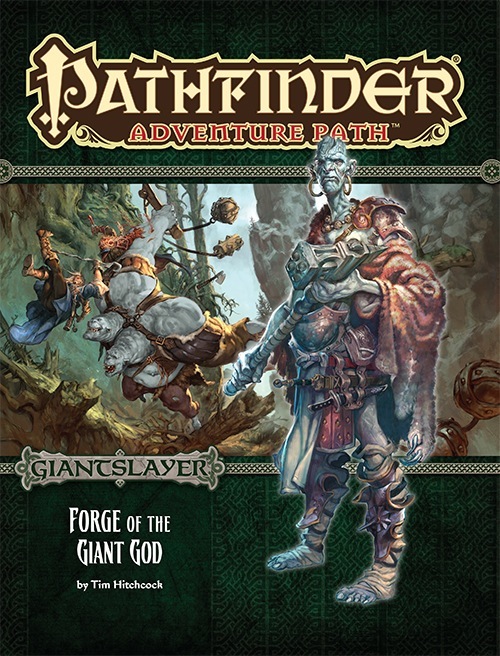
Giantslayer - Forge of the Giant God


I began reading Forge of the Giant God (the third part of the Giantslayer Adventure Path) by Tim Hitchcock about a year ago, and got through roughly half of it. I didn’t stop because I disliked it; it was just the state my life was in at the time (see this post for details). Over the next several months, I occasionally went back to it and got through a little bit more of it each time. I thought I eventually made it all the way through, though when I came back to it last week with the intention of reviewing it, I discovered a bookmark (one I thought I’d misplaced) about three quarters of the way through. Assuming I was wrong about finishing it, I picked up reading from that spot.

And was thoroughly confused.

Some things seemed familiar as though I’d read them before and others seemed completely new. More importantly though, I realised I really didn’t have a good enough recall of even the earlier parts of the adventure I knew for a fact I had previously read. This served as a pretty good example of why you should never spread out the reading of something like this over a year with months-long breaks. So I decided to do what I should have done as soon as I picked it up again last week, and that was to reread the entire thing beginning to end.

And I’m glad I did. I came away from it with a higher opinion of the adventure than I had before. I remember previously really liking the opening section of the adventure and disliking the rest. However, this time around, I liked it more. I do still think there are some issues, but they don’t bother me as much they did. The adventure is a little too similar to the previous adventure, The Hill Giant’s Pledge, in that both involve sneaking into a similar giant-controlled location (and The Hill Giant’s Pledge does it better). Following up one adventure with another that does virtually the same thing runs the risk of making things stale for the players. However, there are things to make this adventure more unique, and good GMs should be able to make it into a memorable experience.

SPOILERS FOLLOW

Wednesday, 13 June 2018

The Savior's Champion


Reading has always been an important part of my life. I do a lot of reading, but recently, most of that has been either roleplaying books or non-fiction. Last month, I realised that it had been over a year since I’d read a novel. Clearly, that needed rectifying. But first, I needed to choose something to read. I own a huge pile of books that have been waiting to be read for years, but I decided to skip all those and go for something completely new. My attention turned almost immediately to The Savior’s Champion, mainly because I’ve watched a lot of author Jenna Moreci’s YouTube videos and I was aware of its recent release.

I’d read a number of reviews of the book, most of them gushing with praise, so I figured it was a safe bet. However, despite the positive reviews, I didn’t expect to love the book as much, just like it. Too often, I’ve encountered things that don’t turn out to be as good as the hype. Also, I can be very critical of my entertainment, even the things I love (just read my Doctor Who reviews for examples of that).

Well, I was wrong. I absolutely loved this book. It very quickly became one of those books that I just couldn’t put down (except I had to because I had to go to work or do other boring things like that). It may have been over a year since I last read a novel, but it has been even longer since one had me so enthralled beginning to end.

Tuesday, 12 June 2018

Doctor Who - Twice Upon a Time


I know that, over the entire history of Doctor Who, most actors playing the Doctor have done about three seasons before moving on. Nevertheless, whenever those three years are up, it always feels much shorter. It feels like barely more than yesterday that I was writing about the arrival of Peter Capaldi when, in actuality, it’s nearly six months after his final episode aired. The entire era of the twelfth Doctor has come and gone.

With Series 10, particularly its final two episodes “World Enough and Time” and “The Doctor Falls”, the twelfth Doctor’s era has very nearly gone out on a high. Indeed, as I state in my review, the only significant problem with “The Doctor Falls” is that it’s not the twelfth Doctor’s final episode. Instead, it drags the regeneration out to another episode. That episode, December 2017’s Christmas special, “Twice Upon a Time”, is not a bad episode, but it also falls pretty short of being a great episode.

There are a lot of good elements to the episode, but it also feels very tagged on. It’s not the climax that Series 10 was leading to (that’s “The Doctor Falls”), but also doesn’t quite manage to be its own thing. It’s still reliant on the Doctor holding back his regeneration—on an emotional state set up in the previous episode but not successfully carried through into this one.

SPOILERS FOLLOW