As the title says, Pearl Mackie has been announced as the new companion, Bill. The BBC released a short trailer featuring her, the Doctor, and the Daleks, which you can see below. Full episodes of Doctor Who will return with this year's Christmas special and then Series 10 in 2017.
Saturday, 23 April 2016


Friday, 18 March 2016
Ships of the Inner Sea

Ships of the Inner Sea provides
material for gamemasters to use
in seafaring
campaigns.
It describes
seven ships that sail the Inner Sea, including details of their
layouts, histories, and crews. Some
of the ships and crews might be allies of the PCs, or the PCs might
even join their crews; other ships contain enemies and villains to
fight. All the ships make for interesting encounters, either one-off
or recurring. Ships of the Inner Sea
doesn't just have to be for seafaring campaigns either. Even
campaigns that are mostly landlocked may spend some short periods at
sea as the player characters travel from one location to another, and
such an occasion could also be a perfect opportunity for an encounter
with one of the ships from this book.
I
generally like these kinds of sourcebooks as they provide material
that GMs can draw on when they need something last-minute, while also
being supplements they can build entire campaigns around. For the
most part, Ships of the Inner Sea
doesn't disappoint. There's a good variety in the types of ships
presented and all of them contain enough ideas and adventure seeds to
keep any group occupied for some time. It's certainly a resource I
will turn to if I run a seafaring campaign at some point in the
future.
Saturday, 12 March 2016
Bestiary 5
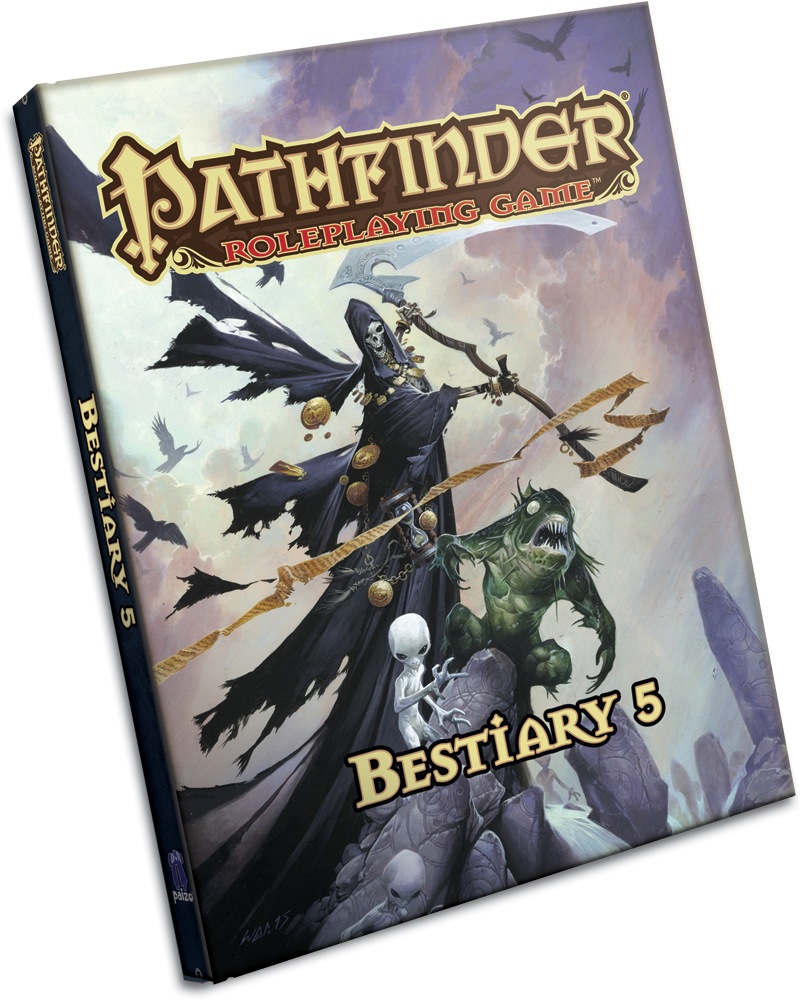
The
Pathfinder Roleplaying Game Bestiary 5
adds over 300 more new monsters to the Pathfinder game. With every
Bestiary volume
containing in the vicinity of 300 monsters, that makes approximately
1500 monsters just from the Bestiaries
(and not counting the numerous other sources that introduce
monsters).
In my review of Bestiary 4
a couple years ago, I pondered a bit on the thought of when does the
number of monsters become too big. I suppose the only answer is
either when people grow tired of them or when the new monsters stop
being original and interesting. Bestiary 5
does not seem to be at either of those points, though I wonder how far off that point is.
In
fact, I like Bestiary 5
a great deal. On an initial look-through before reading it more
thoroughly, there were numerous monsters that drew my attention, that
made me want to know more about them, and screamed to be included in
one of my games sometime down the road. There's a wide variety of
monsters present, with every type represented and
the spread between them being fairly even. Ooze is a monster type
that is often under-represented, but there are quite a few new oozes
in this book. Along with that there are lots of magical beasts,
constructs, undead, vermin, fey, and so on. In addition, there are
several mythic monsters, and Bestiary 5
is the first hardcover book to contain monsters using the occult
rules from Occult Adventures.
The monsters cover a wide variety of challenge ratings as well, from
1/6 to 24. The bulk of the creatures are in the low- to mid-CR range,
but there are also a sizeable number of high-CR monsters as well.
Tuesday, 8 March 2016
Mummy's Mask Player's Guide
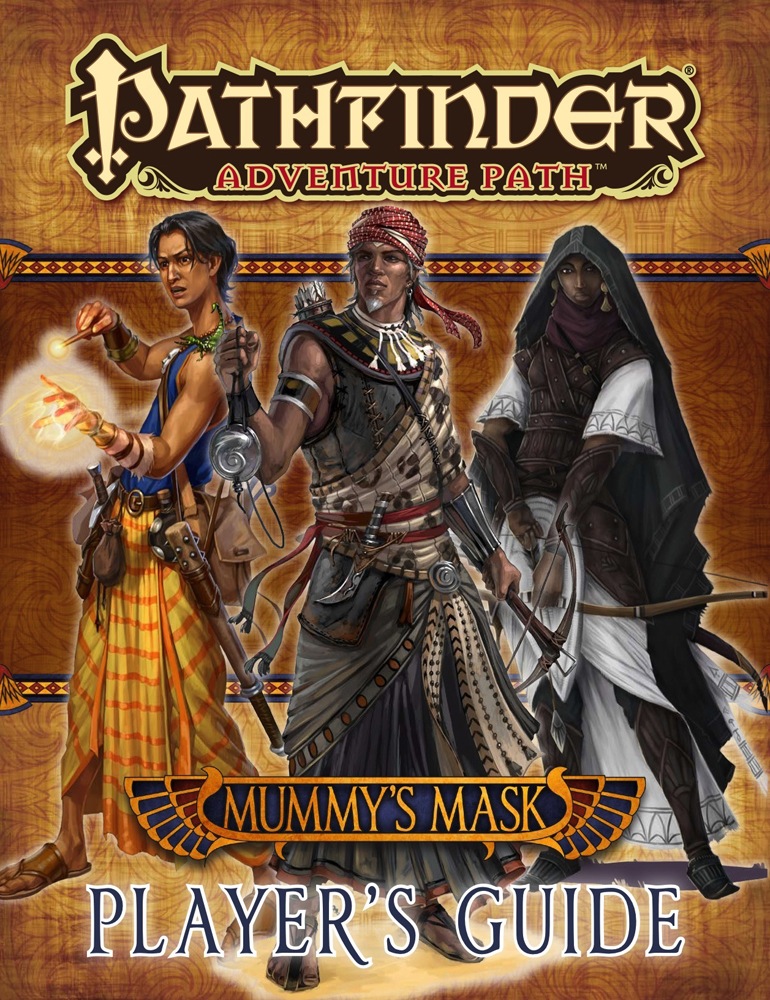
One
thing that has often (perhaps surprisingly) varied in adventure path
Player's Guides is how much direct advice they give on character
creation. Some offer only brief descriptions of how each character
class might fit in. Others go into more detail, offering suggestions
on specific feats, spells, skills, and other abilities that would
work well for their particular adventure paths. The Mummy's Mask Player's Guide is
one of these more detailed ones, spending several pages on suggested
options for characters.
I
like the layout chosen for
this as well. Instead of going through classes in alphabetical order,
it looks at categories, such as suggested archetypes, animal
companions, favoured enemies, and so on. It also covers the languages
that will be useful, common religions, and even suggestions for
skills, feats, and traits beyond the campaign traits that are
introduced later in the book. Another very useful inclusion is some
suggested gear to purchase at character creation. Since much of the
first adventure will involve searching through ancient tombs and
buildings, this includes the types of things that are useful in
dungeon crawling, such as candles, chalk, magnifying glasses, and
rope. Players would be wise to take note of what's on the list and
try to acquire as much of it as they can.
Monday, 7 March 2016
Iron Gods Player's Guide
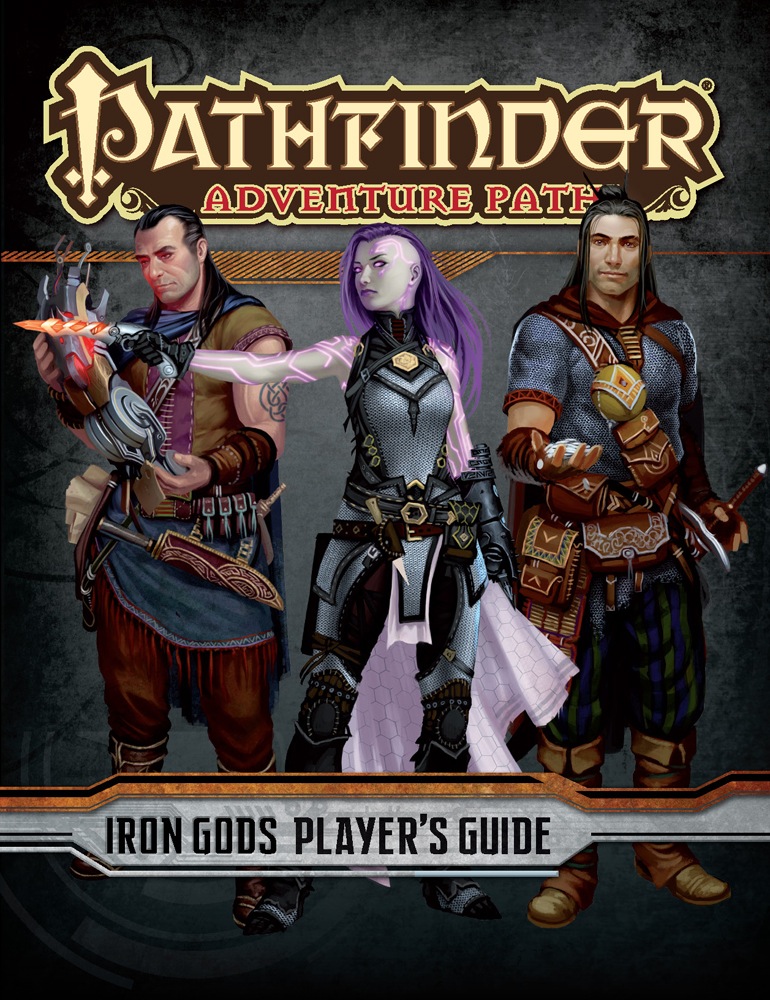
All
things considered, the Iron Gods Player's Guide
does a very good job of setting the scene for the players and
preparing them for what is to come. It gives just enough information
to help them create characters that will fit the adventure path,
without giving away too many spoilers of what will happen during it.
The first part of the book
contains a quite extensive section on “Character Tips”, including
archetype suggestions, appropriate animal companions, favoured
enemies, languages, and so on. There is also a sidebar on where GMs
and players can go for additional information pertinent to the
adventure path (books like the Technology Guide, People of the River, and
Numeria, Land of Fallen Stars).
Tuesday, 1 March 2016
Melee Tactics Toolbox
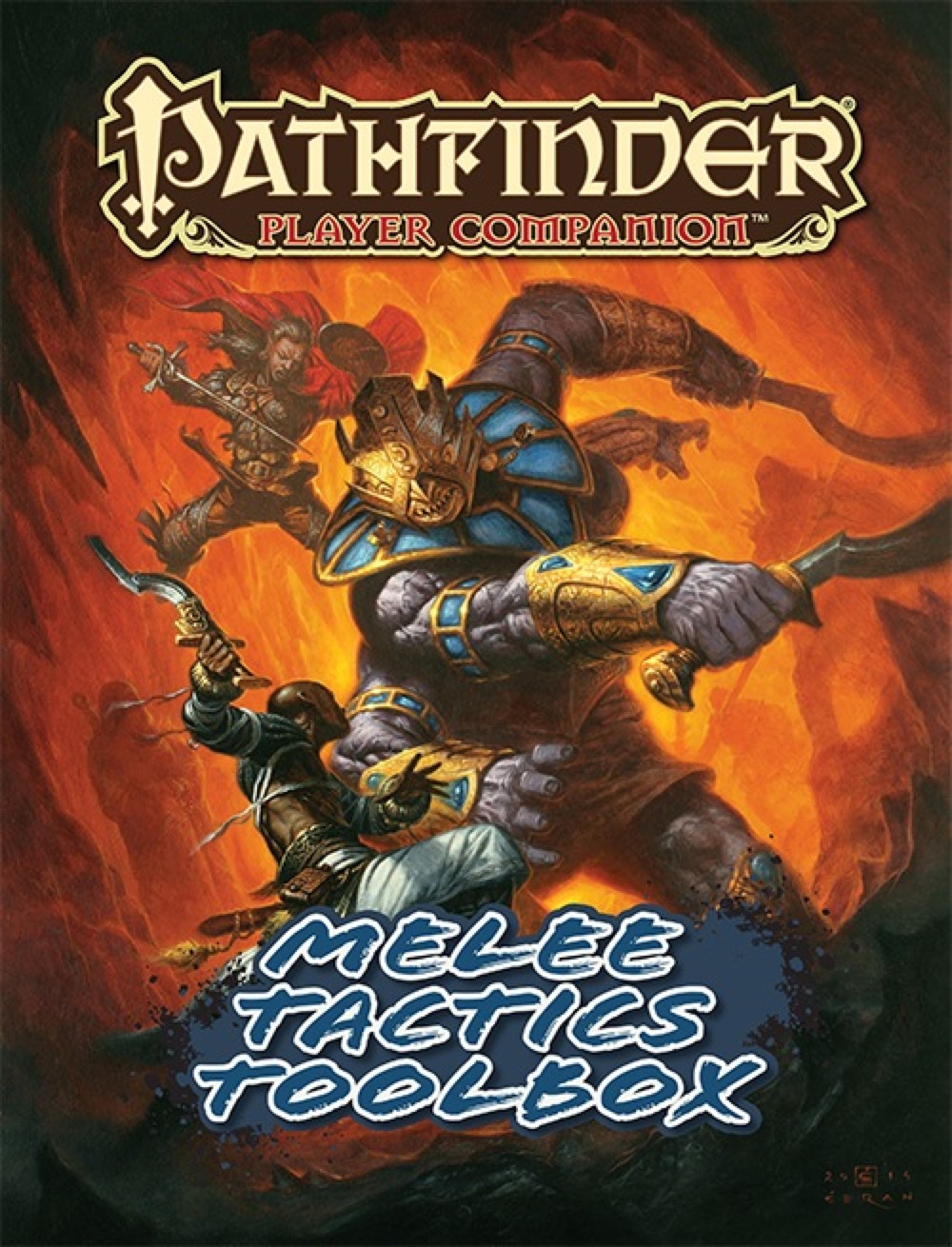
Turns
out, there's not a whole lot more world flavour beyond this, but
there is a bit more. Like Ranged Tactics Toolbox,
Melee Tactics Toolbox
is primarily a book of character options, this time focusing on mêlée
combat. Like its companion,
it doesn't actually spend a great deal of time on the tactics of its
title, but does have scores
of new feats, weapons, magic items, and more. Also
like its companion, it seems to be desperately trying to create new
things for something that doesn't really need any new things added to
it. By itself or in conjunction with Ranged Tactics
Toolbox, Melee Tactics
Toolbox will likely be a useful
resource for players, but in conjunction with the scores of other
books out there, it will likely be mostly forgettable. It's
not a bad book; it just doesn't really stand out.
February (and December/January) Round-Up Plus Pathfinder Humble Bundle
Since
my last round-up, Doctor Who
Series 9 came to an end with the amazing “Heaven Sent” and
not-so-amazing “Hell Bent”. Then, just a
couple weeks later, there was the 2015 Christmas special, “The Husbands of River Song”.
During that time, I also wrote a review looking back on the entirety
of Series 9. In that, I made
mention of a planned retrospective on Clara as a companion and said
to expect it in early January. Obviously, that hasn't happened yet,
but I still intend to write it, and hope to have it up in the next
week or so—definitely before the end of March. I'm also looking to
get back to my Series 8 reviews by late March or early April.
In
January, news came that Steven Moffat will be leaving
Doctor Who after
Series 10. In the wake of that news, there has been a lot of
speculation on whether Peter Capaldi will be leaving as well and who
might replace him. So far, however, there has been no actual
announcement of his departure and I, personally, hope he sticks
around for another year or two. Of
course, we'll have to wait and see, but just because then-current
David Tennant left when Russell T Davies left doesn't mean Peter
Capaldi has to leave with Moffat.
Also
in January, for a bit of fun, I posted this little 60's gem.
On New Year's Day, the new Sherlock special, The Abominable Bride, aired. I haven't reviewed it yet. I will though.
On New Year's Day, the new Sherlock special, The Abominable Bride, aired. I haven't reviewed it yet. I will though.
On
the roleplaying side of things, since my last round-up, I've written
reviews of We Be Goblins Free!,
Andoran, Birthplace of Freedom,
Familiar Folio,
Occult Realms,
Lost Treasures,
and Ranged Tactics Toolbox.
I also looked at the hardcover Pathfinder Unchained and completed
the remaining instalments of the Iron Gods
Adventure Path: Valley of the Brain Collectors, Palace of Fallen Stars, and The Divinity Drive. Be
sure to check out any you haven't read. Coming up next will be Melee Tactics Toolbox and the
Iron Gods Player's Guide.

Here's
to a great March!
Monday, 29 February 2016
Iron Gods - The Divinity Drive
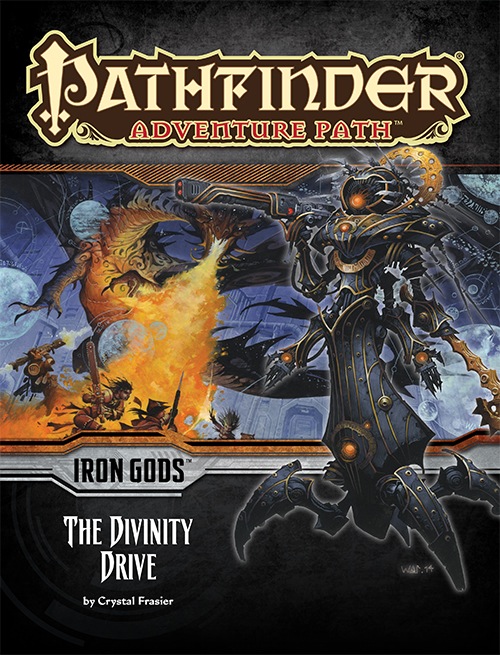
The Divinity Drive by Crystal
Frasier does a better job than many of reaching those unreachable
goals. It's a good adventure in its own right and, as the finale of
Iron Gods,
it provides a suitably climactic resolution, as the player characters
(hopefully) save the world from a unique and rather terrifying
threat. That said, it is a surprisingly linear adventure compared to
how open-ended most of Iron Gods
has been (with The Choking Tower
being an exception). It also comes across as something of a lengthy
combat-fest, with only limited opportunity for diplomacy and
roleplay. There are fewer shades of grey than in the other
adventures; enemies are enemies and allies are...rare. Its more
linear nature also means that it makes a number of assumptions about
how the PCs have progressed through the previous adventures, and
gives gamemasters little to no guidance on what to do if things have
progressed differently. This is particularly unfortunate in such an
open-ended adventure path.
SPOILERS
FOLLOW
Monday, 22 February 2016
Ranged Tactics Toolbox
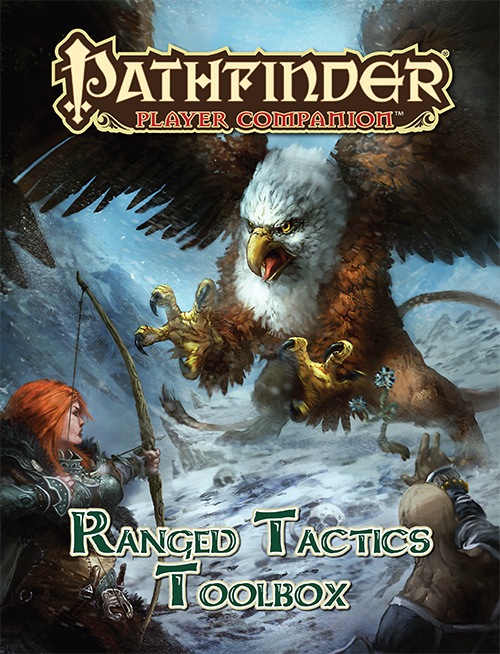
After
reading the book, that initial impression hasn't changed all that
much. Don't get me wrong. This isn't a bad book and there are some
interesting options in it. However, I do have to question what it
really adds to the game, and I'm not sure I can come up with a good
answer. The Player Companion
books are supposedly part of the Golarion setting, and while this
book has a few things keyed to certain lands and cultures, it doesn't
really expand on the world much. Admittedly,
this is somewhat in keeping with other Player Companion
books, which have become more and more about character options than
player-oriented world material. But its character options also don't
really stand out amongst the myriad other options already out there. Although they are technically new, they feel more like retreads of things that have been done many times before.
It
is an unfortunate fact that the more new options are added to the
game, the more likely those
options will end up never used. I find this particularly true of the
Player Companion
books. With a few notable exceptions, after an initial reading, the
vast majority of them end up sitting on my shelf and never touched
again—except when sifting through to look for one of those few
exceptions, and then it's only to move them out of the way. I suspect
Ranged Tactics Toolbox,
despite what interesting things it does have, will end up being one
of those never used books.
Of
course, many people out there don't own every book and there will
certainly be people for whom Ranged Tactics Toolbox
may be the only book beyond the core Pathfinder books they own. Such
people may well get quite a lot of use out of the book. I think it's
important to keep this in mind, and I try to review products from
both the perspective of how they
work on their
own separate from all other products, and how they
fit into the larger whole. And that's why I say Ranged
Tactics Toolbox isn't a bad
book. It certainly has good and interesting things when looked at by
itself. It's just that, when viewed as part of the larger whole, it
kind of vanishes
in the sea of options.
Sunday, 21 February 2016
Iron Gods - Palace of Fallen Stars
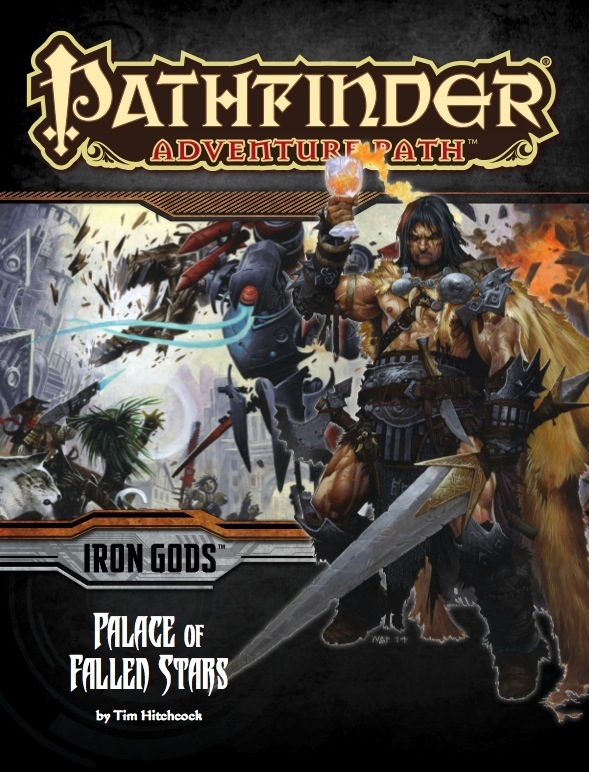
With
Iron Gods, however,
the PCs have had to be mostly self-motivating. They still encounter
NPC allies, of course, but these allies don't really direct the PCs
in any way. Fires of Creation
has an initial set-up to draw the PCs in, but after that, they're
pretty much on their own. Each instalment relies on the PCs deciding
on their own to head into the next. This is particularly true of
Lords of Rust
and Valley of the Brain Collectors,
but even The Choking Tower,
the least sandboxy
of this AP so far, still relies on the PCs' self-motivation to get
started. The fifth instalment, Palace of Fallen Stars by
Tim Hitchcock is also no
exception. Of course, by this
point, the PCs are probably quite invested in seeing things through
to the very end. Motivating themselves shouldn't be that difficult.
Like
Lords of Rust and
Valley of the Brain Collectors
before it, Palace of Fallen Stars
is very much a sandbox adventure. How things play out is almost
entirely dependent on the actions of the PCs, from the order of
events, to their results, to which NPCs live and which die. It's even
technically possible to bypass this adventure and jump to the sixth
one before coming back and completing this one (albeit, that way
would likely be
considerably deadlier). The
text does a good job of accounting for the many different
possibilities and for how NPCs might react, while never forcing any
particular path. All in all, it makes for a very good adventure, one
that's going to be very different for every group that plays it.
SPOILERS
FOLLOW
Subscribe to:
Posts (Atom)