Friday, 15 November 2013

Wizards Vs Aliens - Vice Versa


Vice Versa” by Clayton Hickman is rather unusual—not in its plot or subject matter, but in its effect. It is simultaneously one of the best episodes of Wizards Vs Aliens so far, and also one of the most frustrating. Taken by itself, without the context of the series around it, it works perfectly. It is fun and energetic, but well paced. The cast are at their best, delivering some absolutely wonderful performances. The story holds together well and wraps itself up cleverly. Yet, when taken in the context of what comes before it (namely the tragic conclusion of “100 Wizards”), it simply doesn’t fit. Everyone’s far too happy, especially Tom. In fact, if it weren’t for the mention of Katie dumping Tom, there would be nothing at all to indicate that “100 Wizards” ever even happened.

Part of the problem is that it’s a pretty standard second story of a television series: light-hearted filler that has little effect on the direction of the show as a whole. Apart from possibly a hint or two of a larger meta-plot, second stories tend to be “throwaways”, ones you can miss without ruining your enjoyment of the series as a whole, as little of any importance happens in them. Wizards Vs Aliens followed this pattern in series one with its second story, “Grazlax Attacks”, and is doing so again now with “Vice Versa”. But while a throwaway story works in early series one (even though “Grazlax Attacks” is otherwise an inferior story to “Vice Versa”), it doesn’t work so well now in the second series. The show has reached a point where it can no longer ignore the consequences of actions and events that take place. For it to progress believably, its characters need to respond organically, which they’re just not doing.

That said, “Vice Versa” is a great deal of fun, and I love it to bits. It makes for a frustrating dichotomy.

SPOILERS FOLLOW

Thursday, 14 November 2013

Doctor Who 50th Anniversary - Reflections on the Eleventh Doctor


Doctor Who is undoubtedly hugely popular at the moment, perhaps more than it’s ever been. The 50th anniversary special, which is less than two weeks away, will be simulcast in over 75 countries worldwide—and not just on television, but in movie theatres as well—in 3D, too. When I was growing up, such a thing would have been beyond belief. Even now, as the 50th approaches, it doesn’t quite seem possible. Until I’m sitting in the theatre watching the special on the 25th of November (alas, due to a computer mess-up, tickets for the 23rd were sold out before I could get some for that day), there’ll be a part of me that doesn’t quite believe it, perhaps not even then. But Doctor Who is big now.

Of course, that doesn’t stop the British tabloids from occasionally running stories about slipping ratings. They’ll carefully select the overnight ratings from episodes a few years ago, compare them to the overnights of a recent episode, and declare the show in trouble. They’ll completely neglect to mention that overnights don’t really matter to the BBC. The final ratings, which include everyone who watched the episode within seven days, are just as strong as ever. The only thing that’s really changed is that more people are watching the episodes at the times of their choosing rather than the air-times. A.I. (appreciation index) scores have also remained more-or-less stable, indicating people still like what they’re watching.

These tabloid stories also don’t take into account the massive increase in popularity Doctor Who has received in the rest of the world, outside of the U.K., particularly in the United States, since Matt Smith took over as the Doctor and Steven Moffat became showrunner. This is due in large part to the amount of publicity BBC America has given the show in the U.S. When the Sci Fi network carried the programme during the David Tennant years, they did little to publicize it (similar to how CBC handled publicity here in Canada). BBC America’s publicity campaign has brought in hordes of viewers. However, while publicity has brought the viewers in, the show has kept them watching. People obviously like it.

As with any period in Doctor Who’s history, there are, of course, people who are dissatisfied. There were fans who complained loudly about Russell T Davies. Before him, it was John Nathan Turner. Nothing can satisfy everyone. So it’s not surprising that there are very vocal fans who are disappointed with the most recent period of the programme. But from my perspective, there’s one major difference this time round: I’m one of the dissatisfied.

Doctor Who - The Night of the Doctor

Watch the following first before reading any further if you don't want a really big spoiler (and the internet hasn't already spoiled it for you):


SPOILERS FOLLOW

Saturday, 9 November 2013

2nd Trailer for The Day of the Doctor

Hot on the tails of today's earlier trailer  (which actually leaked yesterday), comes this second, extended trailer. In it, we learn that the Doctor is about to face his "darkest day".

What? Again? Just how many darkest days or hours has the Doctor had?

The Day of the Doctor Trailer and Clip

The first clip-based trailer for the Doctor Who 50th anniversary special is now available. Here it is:


Yesterday, the BBC also released a very brief clip from the special, which you can see here:

Friday, 8 November 2013

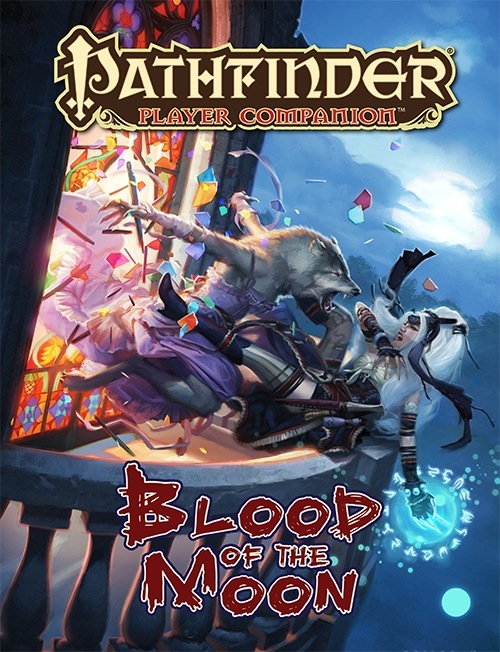
Blood of the Moon


There’s a love amongst many roleplayers for new playable races beyond the core dwarves, elves, gnomes, and halflings. Part of the point of roleplaying is to pretend to be something different and what better way than to play unusual creatures with new and interesting abilities. From aasimars and tieflings to traditionally monstrous races like goblins and kobolds, expanding the list of playable races allows for new experiences and new options. Pathfinder has certainly provided many possibilities for players, with the Advanced Race Guide being the ultimate source for various races to choose from—including a system for gamemasters to design their own.

There have also been several Pathfinder Player Companion books that look more closely at some of these options, at how they fit into the world of Golarion, and providing new options for people wanting to play characters of these races. Most of these books look at races that already exist in the game, but Blood of the Moon does something a little different. It introduces a brand new playable race, skinwalkers, who are descended from lycanthropes (essentially the lycanthropic equivalent of aasimars and tieflings), as well as a number of skinwalker variant races that are tied more specifically to each of the various kinds of lycanthrope.

One could argue that there are already more than enough playable races in the game, and to be honest, I sometimes feel this way myself. However, one could also argue that there are more than enough monsters, spells, feats, archetypes, etc. in the game already, and yet numerous books continue to introduce more of those. Why not more races? While there are certainly more options available than anyone could ever use in a single campaign, the presence of such a large variety allows for different choices in different campaigns, giving each campaign the potential to be unique. From this perspective, I really like the variety. So while the races of Blood of the Moon are certainly not needed in the game, they make for interesting options for future campaigns.

Wednesday, 6 November 2013

Wizards Vs Aliens - 100 Wizards


When Wizards Vs Aliens first premièred last year, I was eager to see it, coming as it did from the same people responsible for The Sarah Jane Adventures. There was good reason to believe it would be good. And it was, albeit not as good as I’d hoped it might be. Nevertheless, it was good enough to keep me eager for the second series. I saw a lot of potential in the series, even if many of its characters only occasionally rose above the stereotypes they were based on. So I was quite glad to learn that there would, indeed, be a second series. The first year of a show is often a time of figuring out what it can do and what its overall direction will be; the second year is often the year when the show demonstrates whether it will sink or swim.

Like last year (and like The Sarah Jane Adventures before it), this new series of Wizards Vs Aliens is made of two-episode stories. There are fourteen episodes this year instead of twelve, airing two per week over seven weeks. One of the forthcoming stories this year was originally written for the fifth series of Sarah Jane, but was one of the ones not filmed before Elisabeth Sladen’s untimely passing. The fact that it has been rewritten as a Wizards Vs Aliens story kind of shows the spiritual connectedness between the two shows and I’m eager to see how it works. The final story of this year is written by Russell T Davies (his first script for the show he co-created) and I’m also eager to see that one.

The second series première, “100 Wizards” by Phil Ford does not yet achieve the potential I’d like to see from the show. It’s very much a re-establishing of the premise after nearly a year off the air. But I certainly haven’t given up hope. I still see the potential and still hope that this season, Wizards Vs Aliens will significantly “up its game”. Indeed, “100 Wizards” is a great deal of fun overall, and fun is a great deal of what the show is about. It took me a little while to get into the story, but by the end of the second episode, I was fully engaged in what was going on. So in that respect, “100 Wizards” succeeds admirably.

SPOILERS FOLLOW

Tuesday, 5 November 2013

Doctor Who 50th Anniversary - Reflections on the Tenth Doctor


I commented a couple weeks ago that the recent periods of Doctor Who somewhat eerily mirror the periods of my own life. I had my own wilderness years of sorts during the show’s wilderness years. In the early 2000’s, I relocated and started to build my life back up to something of a high point, and around the same time, Doctor Who came back and also built itself back up to a high point.

Of course, everyone has their own opinions on when the show has been at it its best, but for me, I do see the Russell T Davies years (both the ninth and tenth Doctors) as the years when Doctor Who was at its most consistent best. This doesn’t mean every episode was great and perfect, and it doesn’t mean there weren’t great and incredible periods before it (I wouldn’t have been a fan for all those years if there weren’t). There were weak episodes during the ninth and tenth Doctors’ periods and there were brilliant episodes, but the gap between weak and brilliant never seemed as great as the gap between weak and brilliant could sometimes be in the classic series. Just look at the difference in quality between “The Caves of Androzani” and the story that came immediately after it in the same season, “The Twin Dilemma”. There was an overall greater consistency under Russell T Davies’s control, and I was immensely satisfied with what I was watching, even after turning my rather critical eye upon it. And I don’t deny I can be very critical of what I watch.

As I covered last week, I loved Christopher Eccleston’s series. I was disappointed that he wasn’t sticking around, but I was eager to see what the new Doctor would bring to the role. Like most of the other Doctors, I hadn’t heard of David Tennant when he was announced, so I had no preconceived notions of him, but I trusted that he would be good. Before Series One has started, I had worried about the quality of the show itself, but those worries were now completely gone. I expected brilliance. Alas, there would be quite a wait for some of it.

Thursday, 31 October 2013

October Round-Up - A Great Month for Doctor Who!


This was quite the month for Doctor Who fans! And there’s still nearly a month until the 50th anniversary. Build-up to the anniversary certainly has begun in earnest though. The month opened with further information on the anniversary simulcast. Specific information on the theatre venues came later in the month, although I didn’t specifically report on that. Tickets for the simulcast went on sale on October 25th, and I’m pretty sure they all sold out quite quickly. They certainly did in Toronto.

The tickets were scheduled to go on sale at 9 a.m. eastern time. I was ready and waiting to get mine. The option to purchase tickets for the Toronto location (Scotiabank Theatre) didn’t go live until nearly quarter past nine. I immediately clicked to purchase and went through the whole process, confirmed all my information for payment, and so on. Then I got the following message: “We cannot finalize your payment due to a technical error. Please try again later.” I tried again immediately, only to find that the tickets were sold out. I was very unimpressed. Oh well. I purchased tickets for November 25th instead and encountered the same problem a couple more times before I decided to try a different payment option. That finally worked, so hooray! I hope the 3D doesn’t give me too much of a headache.

The first trailer for the 50th anniversary episode (not including the Comic-Con trailer from several months ago) was released this month. It was specially recorded and does not contain any actual scenes from the episode. Instead, it’s a bit of a tribute to the full 50 years of Doctor Who history, with a narration by Matt Smith to whet viewers’ appetites for the special. Visually, it’s really quite stunning, and if you look carefully, you can see a lot of images from across Doctor Who’s history, both the classic series and the new. Apart from being a nostalgia-fest, however, there’s not much of what one could actually consider content in it, but it is just a trailer. I do wish, though, that Doctor Who would lighten up on the superlative adjectives for a while. “One impossible day”, “the Impossible Girl”, “the Doctor’s darkest hour”—lines like these show up not just in trailers, but in the programme itself, and after a while, they start to lose their meaning. When impossible things keep happening, they’re just not impossible anymore. At any rate, here’s the trailer:


The 50th anniversary, however, was not the biggest news of the month. That honour definitely goes to the recovery of missing episodes! Nine previously missing Doctor Who episodes from the sixties have been discovered and are now available for download purchase. I wrote a review of one of the newly recovered stories, “The Enemy of the World”, something I never imagined I’d get to do a couple years ago when I started this blog. I’ve not actually had a chance to watch “The Web of Fear” yet, but I’ll hopefully get to it soon. Expect a review of it shortly after.

I also continued my own reflections on the impact of Doctor Who on my own life, looking at the sixth, seventh, eighth, and ninth Doctors. The last couple were published a bit late (I’ve been trying to work to a schedule of one each weekend), but I hope to be back on schedule with the tenth Doctor this weekend.

In other Doctor Who news, the TARDIS in Orbit project has another update:


With the heavy emphasis on Doctor Who this month, one might start to think this is a Doctor Who blog, but it’s really quite a bit more than that! There were only three non-Doctor Who posts this month, all of them Pathfinder. With my reviews of Mythic Realms, Mythic Origins, and Sword of Valor, I finally got caught up on Pathfinder reviews. When I posted the review of Sword of Valor, I had not yet received any new products. Of course, that’s changed in the last couple of days, so expect some more Pathfinder reviews soon.

Since November is the 50th anniversary month, there will likely be lots more Doctor Who stuff to come this month (including my remaining reflection posts on the tenth and eleventh Doctors, as well as one on the spin-off series), but I’ll be looking at other stuff too. A new season of Wizards Vs Aliens began this week, so I’ll be reviewing that. Plus, I have a couple of other things I hope to get to as well.

Happy Hallowe'en, everyone, and have a great November!

Wednesday, 30 October 2013

Doctor Who - The Enemy of the World


I started this blog for the purpose of writing reviews, and although I initially intended to primarily write reviews of roleplaying game products, I knew right from the start I’d be doing Doctor Who reviews as well. One of my earliest posts was a review of “Let’s Kill Hitler”, which had just aired at the time. Since then, I’ve reviewed new episodes as they’ve come out (well, except “The Doctor, the Widow, and the Wardrobe”, which was many months late). I’ve often contemplated writing reviews of earlier stories, both from the new series before I started the blog and from the classic series, but other things have always gotten in the way of that idea and taken priority. However, until very recently, I never dreamt that if I did write a review for an earlier story, it would be “The Enemy of the World”. It was a missing story, and while episode three existed in full and audio of the remaining episodes existed, it just wouldn’t have seemed right to review something that was mostly incomplete.


With the return of the remaining episodes of “The Enemy of the World”, along with most of the remaining episodes of “The Web of Fear”, it was no longer just a case of finding time to write a review of an old story. It was also a case of finding time to watch an old story that I had never seen before (apart from a single episode) and then write a review of it. But it is a joyous problem to have.

The Enemy of the World”, I feel, suffered from being missing more than many other stories. It was rarely on people’s lists of favourite stories or most-wanted missing episodes. It tended to have a bit of a reputation for being dull. This is due pretty much entirely to the fact that the one surviving episode, the third, is without doubt the weakest of the story. It is rather dull, being mostly filler. The plot thread involving Fedorin is really the only important part of the episode, and that takes up only a small part of it. Griffin the chef is hilariously entertaining, but the rest of the episode contains little of relevance or interest to the rest of the story. With audio existing of the other episodes, it was always clear that episode three was the weakest, but there is so much nuance (particularly in the performances) lost in the audio recordings that this fact wasn’t enough to elevate the entire story in people’s minds. I always suspected that if “The Enemy of the World” ever turned up, people would considerably re-evaluate their opinions of the story, and it seems I was right. People everywhere are now praising it, and with good reason. “The Enemy of the World” is brilliant and perhaps one of the best Patrick Troughton stories of them all.

SPOILERS FOLLOW
(Although I’m not really sure you can have spoilers for a 45-year-old programme.)