Sunday, 8 January 2017

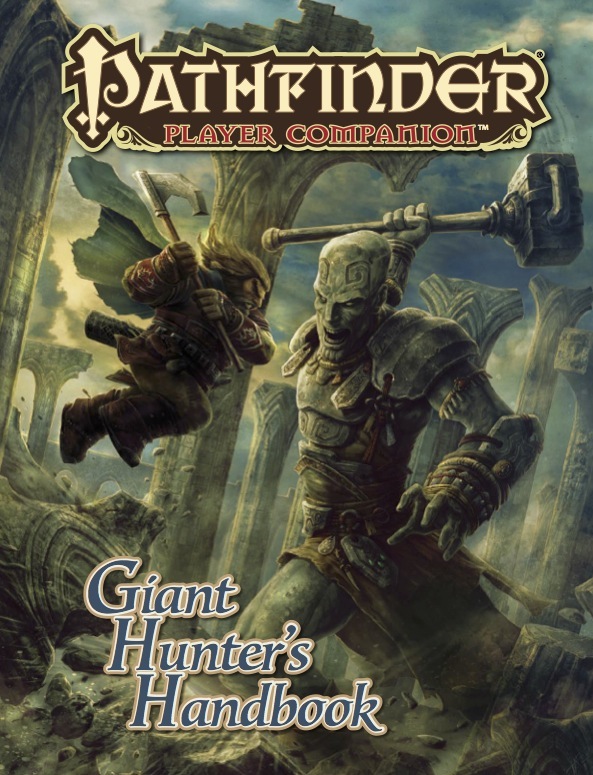
Giant Hunter's Handbook


I must confess that I have grown somewhat tired of the Pathfinder Player Companion line. Over time, the line has become more and more focused on mechanical character options, and less and less on world description and flavour—pretty much the exact opposite of what I am personally looking for. Several months ago, for financial considerations, I had to cut back on how many books I was buying and, as such, Player Companions were amongst the first to go. I have not purchased any of the most recent books in the line. However, I do still have a backlog of Player Companions to get through, and I intend to read and review all of them.

When I opened up Giant Hunter’s Handbook, I expected more of the usual: new archetypes, feats, spells, etc. Those are certainly in there, but I was pleasantly surprised by how much setting flavour and background there is. In fact, the first new mechanical options (in this case, new uses for skills—something these books rarely do much with) don’t appear until page 11. Until then, it’s entirely practical information and advice that giant hunters in the world of Golarion need. Even when the book gets to the new feats, spells, and so on, there is still a lot of setting information to go with them.

The book opens with an introduction to the most common types of giants, separated into categories of “evil giants” and “nonevil giants”, as well as a sidebar with the most basic information that everyone knows about giants. After this, the book moves into more specific details about giants and how to effectively hunt or fight them. Each chapter is two pages long (a typical length for Player Companion books) and covers a specific topic.

Saturday, 7 January 2017

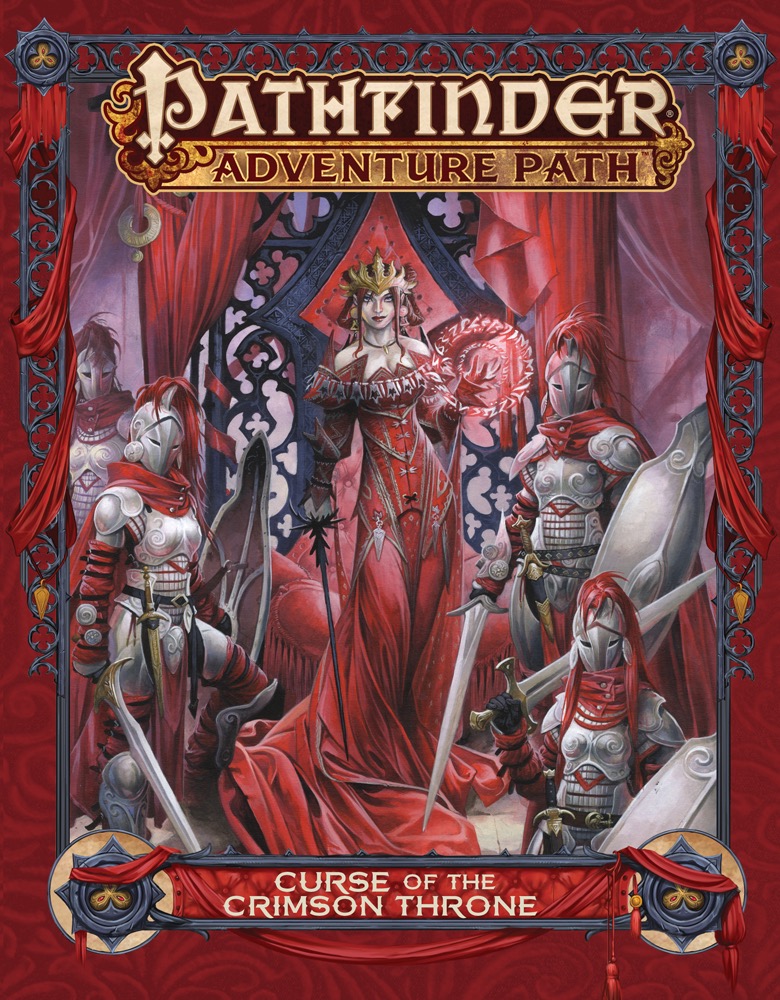
Curse of the Crimson Throne


Over the years, Paizo has published a significant number of adventure paths. The current one, Strange Aeons, is in fact the nineteenth (not including the three published in Dungeon Magazine before Pathfinder Adventure Path was born), and there will likely be many more in the years to come. Yet one of the most memorable is also one of the earliest: Curse of the Crimson Throne. Originally published in Pathfinder Adventure Path Volumes 7 through 12 in 2008, it has gone on to gain a reputation as one of the best—and with good reason.

One of the things that always stood out for me with Crimson Throne was its fully realised setting and cast of vibrant NPCs who remained relevant throughout the entire adventure path. The detail simply made it come alive. Indeed, I have always considered it one of the more dramatic adventure paths. I could imagine cinematic scenes playing out in my head as I read it—not that such things never happened with other adventure paths, but somehow this was just a little more so with Crimson Throne. The adventure path did have its faults, but the whole certainly rose above them.

However, one thing that has made Curse of the Crimson Throne a little less accessible is that the game system it was written for has changed in the years since it was released. In fact, the system changed the very next year with the release of the Pathfinder Roleplaying Game, where Crimson Throne was written for the 3.5 Edition of Dungeons & Dragons. Conversions between the two systems are not particularly difficult, but they can take a bit of time, which can be a bit of a turn-off for someone without the necessary time and wanting an adventure they can use with minimal adjustment.

Three years ago, another of the very early and popular adventure paths, Rise of the Runelords was re-released in an updated hardcover compilation. This was to celebrate the tenth anniversary of Paizo as a company and the fifth anniversary of the Pathfinder name. The anniversary edition of Runelords updated the adventure path to the Pathfinder rules and also took the opportunity to expand it slightly and work out kinks in the original product.

It was perhaps inevitable that Curse of the Crimson Throne would one day also receive a similar treatment. There’s no special anniversary to celebrate this year, but does there really need to be? Much like its Runelords predecessor, the new hardcover compilation of Crimson Throne updates the adventure path to Pathfinder rules and also expands on the story where beneficial and streamlines in other areas. It also takes advantage of the most recent rules supplements, making use of newer monsters, classes, and feats where appropriate.

At nearly 500 pages in length, it is actually a substantially larger tome than the hardcover Runelords (a good 50 pages or so longer), and its extra length is certainly put to good use. Indeed, it manages to make one of the best adventure paths even better.

SPOILERS FOLLOW

Saturday, 31 December 2016

Doctor Who - The Return of Doctor Mysterio


It’s been an entire year since “The Husbands of River Song” first aired, and in that time, there has been no other Doctor Who at all, until now with “The Return of Doctor Mysterio”. It’s been a very noticeable gap. Since Doctor Who returned in 2005, there hasn’t been another year quite like this one. There have been years with a smaller-than-usual number of episodes, but never one with an episode count of only one (not even the so-called “gap year” in 2009 had so few episodes). Indeed, this is the first time two Christmas specials come back-to-back in episode order.

However, a long gap can increase the desire to see new episodes and that certainly was the case with me. I was eager to watch “The Return of Doctor Mysterio” as soon as it aired. But I was also worried. I had to watch it at my parents’ place, which meant making them watch it too, and my parents have little love for Doctor Who these days (despite my mom being a big fan of the original series). By the end of the episode, my fears were confirmed. My parents talked quite a bit about just how terrible the show is these days, and there wasn’t much I could say to argue with them because I kind of agreed—for this episode, at least.

On initial viewing, I was not that impressed by “The Return of Doctor Mysterio”. However, on a second viewing a couple days later, my opinion improved somewhat (which is a trend I’ve noticed happening with episodes by Steven Moffat). I found more things to like about it, even though my initial issues remained.

It’s not really that bad an episode. There have certainly been far worse ones, but there have also been much better ones, too. For a Christmas episode, it does what it needs to do, which is provide light-hearted entertainment and be accessible to casual viewers. It has lots of fun moments, with some knowing nods to superhero tropes. Yet at the same time, it has some rather paper-thin characterisations and alien villains that manage to be both creepy and boring (their basic concept is creepy, but they have no personality). Overall, it’s a rather mediocre episode and not one that’s likely to prove all that memorable, but it is enjoyable.

SPOILERS FOLLOW
Saturday, 23 April 2016

Pearl Mackie is the New Doctor Who Companion

As the title says, Pearl Mackie has been announced as the new companion, Bill. The BBC released a short trailer featuring her, the Doctor, and the Daleks, which you can see below. Full episodes of Doctor Who will return with this year's Christmas special and then Series 10 in 2017.

Friday, 18 March 2016

Ships of the Inner Sea


One of the great things about fantasy games like Pathfinder is the sheer number of different styles of adventuring that are possible. There's a lot more than just dungeons and dragons (pun intended). You can explore the wilderness, journey through tangled jungles, climb towering mountains, get involved in politics, lead armies and overthrow empires, and more. The opportunities are endless. One of the many environments ripe for adventure is the open sea, where you can be travellers to distant lands, merchants carrying goods to various ports, or pirates who plunder what the merchants are carrying. Indeed, shipbound adventures can be amongst the most exciting and fun.

Ships of the Inner Sea provides material for gamemasters to use in seafaring campaigns. It describes seven ships that sail the Inner Sea, including details of their layouts, histories, and crews. Some of the ships and crews might be allies of the PCs, or the PCs might even join their crews; other ships contain enemies and villains to fight. All the ships make for interesting encounters, either one-off or recurring. Ships of the Inner Sea doesn't just have to be for seafaring campaigns either. Even campaigns that are mostly landlocked may spend some short periods at sea as the player characters travel from one location to another, and such an occasion could also be a perfect opportunity for an encounter with one of the ships from this book.

I generally like these kinds of sourcebooks as they provide material that GMs can draw on when they need something last-minute, while also being supplements they can build entire campaigns around. For the most part, Ships of the Inner Sea doesn't disappoint. There's a good variety in the types of ships presented and all of them contain enough ideas and adventure seeds to keep any group occupied for some time. It's certainly a resource I will turn to if I run a seafaring campaign at some point in the future.

Saturday, 12 March 2016

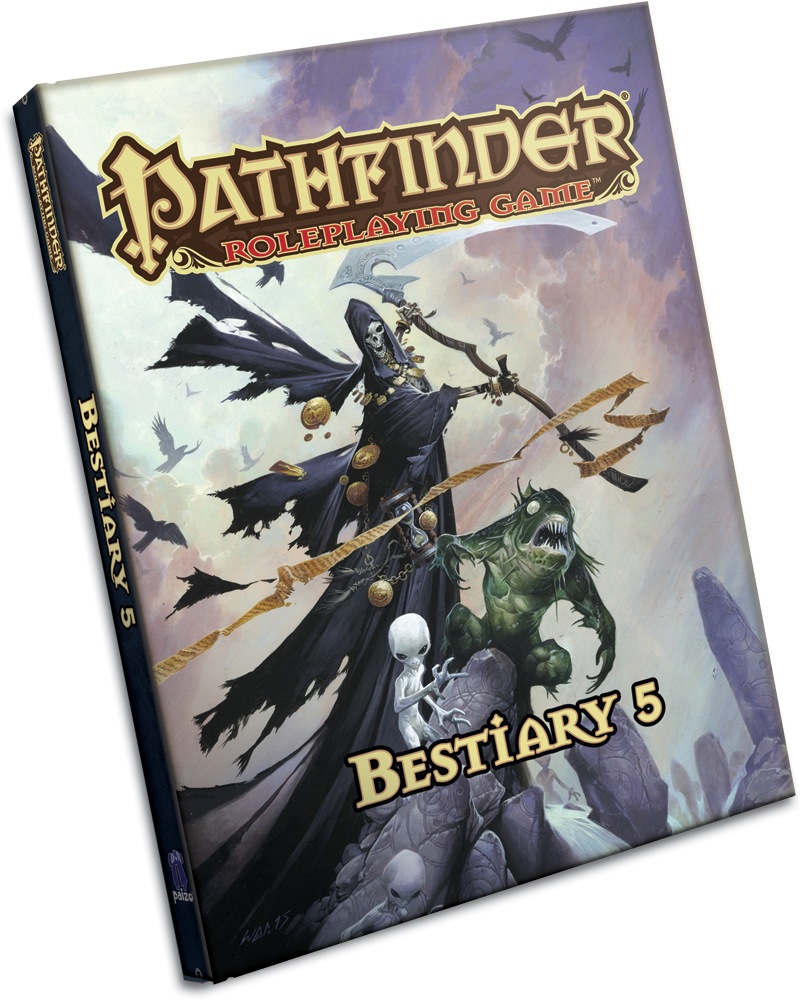
Bestiary 5


You can't really have a Pathfinder game without monsters. Fighting monsters has been one of the central conceits of Dungeons & Dragons since the beginning and Pathfinder is no exception. Yet after a while, fighting the same monsters again and again can become dull. Kobolds and goblins can be great fun once in a while, but eventually people want something different. So it's not surprising that people are constantly thinking up new kinds of monsters to add to their games and surprise other players. And it's also not surprising that books of monsters can creep up to five volumes with probably more to come.

The Pathfinder Roleplaying Game Bestiary 5 adds over 300 more new monsters to the Pathfinder game. With every Bestiary volume containing in the vicinity of 300 monsters, that makes approximately 1500 monsters just from the Bestiaries (and not counting the numerous other sources that introduce monsters). In my review of Bestiary 4 a couple years ago, I pondered a bit on the thought of when does the number of monsters become too big. I suppose the only answer is either when people grow tired of them or when the new monsters stop being original and interesting. Bestiary 5 does not seem to be at either of those points, though I wonder how far off that point is.

In fact, I like Bestiary 5 a great deal. On an initial look-through before reading it more thoroughly, there were numerous monsters that drew my attention, that made me want to know more about them, and screamed to be included in one of my games sometime down the road. There's a wide variety of monsters present, with every type represented and the spread between them being fairly even. Ooze is a monster type that is often under-represented, but there are quite a few new oozes in this book. Along with that there are lots of magical beasts, constructs, undead, vermin, fey, and so on. In addition, there are several mythic monsters, and Bestiary 5 is the first hardcover book to contain monsters using the occult rules from Occult Adventures. The monsters cover a wide variety of challenge ratings as well, from 1/6 to 24. The bulk of the creatures are in the low- to mid-CR range, but there are also a sizeable number of high-CR monsters as well.

Tuesday, 8 March 2016

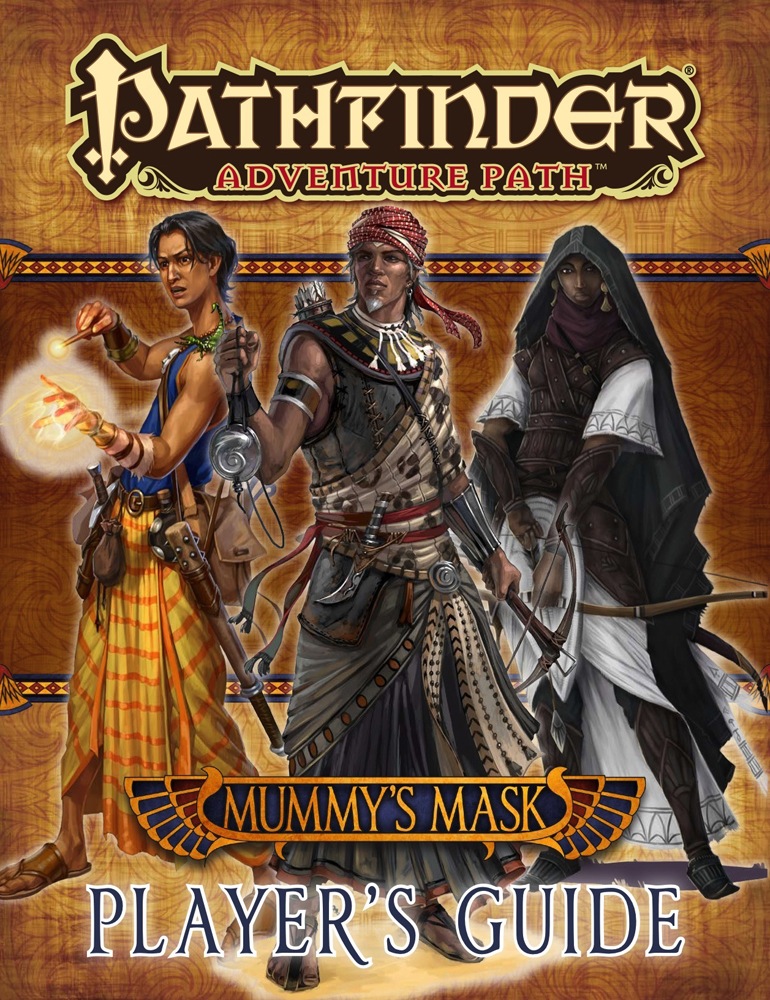
Mummy's Mask Player's Guide


Note: I recently noticed that I missed this one back when I reviewed the adventures in Mummy's Mask. I started this review around the time that I had to disappear for a while due to overwork. Since the book only exists in PDF form and doesn't have a physical copy (unless you print it out yourself), it's never been on my “to review” shelf, and so I completely forgot that I had never finished and posted it. At any rate, I have now finished it and so here it is.

One thing that has often (perhaps surprisingly) varied in adventure path Player's Guides is how much direct advice they give on character creation. Some offer only brief descriptions of how each character class might fit in. Others go into more detail, offering suggestions on specific feats, spells, skills, and other abilities that would work well for their particular adventure paths. The Mummy's Mask Player's Guide is one of these more detailed ones, spending several pages on suggested options for characters.

I like the layout chosen for this as well. Instead of going through classes in alphabetical order, it looks at categories, such as suggested archetypes, animal companions, favoured enemies, and so on. It also covers the languages that will be useful, common religions, and even suggestions for skills, feats, and traits beyond the campaign traits that are introduced later in the book. Another very useful inclusion is some suggested gear to purchase at character creation. Since much of the first adventure will involve searching through ancient tombs and buildings, this includes the types of things that are useful in dungeon crawling, such as candles, chalk, magnifying glasses, and rope. Players would be wise to take note of what's on the list and try to acquire as much of it as they can.

Monday, 7 March 2016

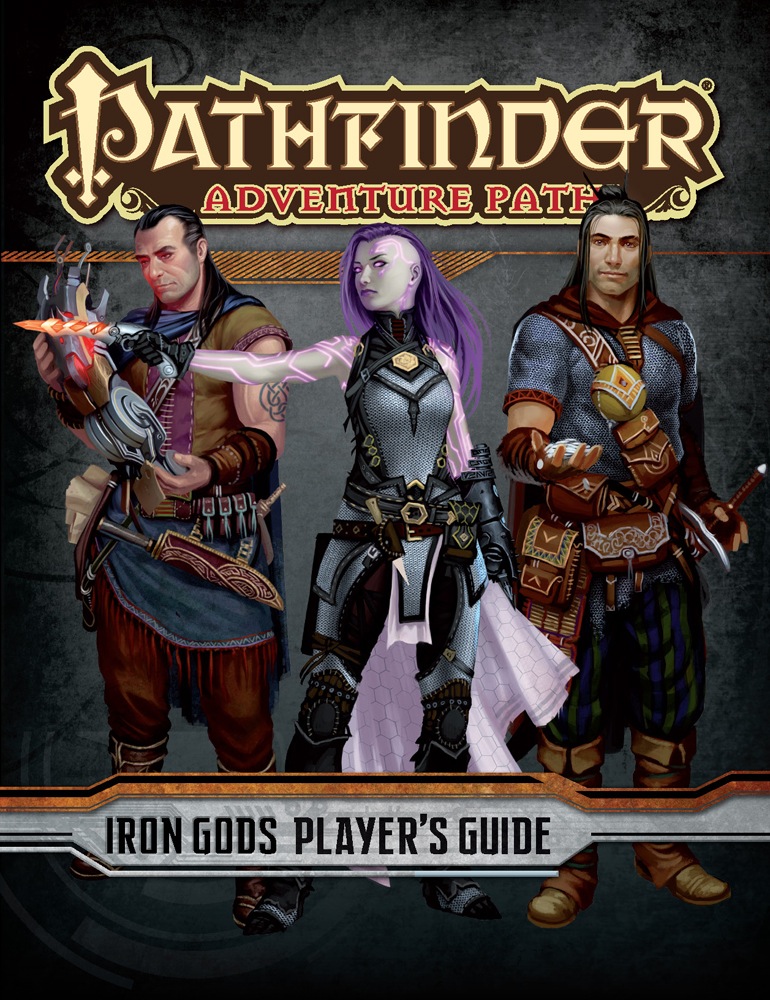
Iron Gods Player's Guide


The Iron Gods Adventure Path is one of the more experimental adventure paths, in that it deals with aliens and technology in a fantasy world. In this way, one might expect that its Player's Guide would have to introduce a lot of new rules material to cover this. However, the adventure path is also about the player characters encountering technology gradually. They don't start in possession of it, but learn of it through play. As such, the Player's Guide actually has a bit of an easier job than those that do need to include many add-on rules.

All things considered, the Iron Gods Player's Guide does a very good job of setting the scene for the players and preparing them for what is to come. It gives just enough information to help them create characters that will fit the adventure path, without giving away too many spoilers of what will happen during it. The first part of the book contains a quite extensive section on “Character Tips”, including archetype suggestions, appropriate animal companions, favoured enemies, languages, and so on. There is also a sidebar on where GMs and players can go for additional information pertinent to the adventure path (books like the Technology Guide, People of the River, and Numeria, Land of Fallen Stars).

Tuesday, 1 March 2016

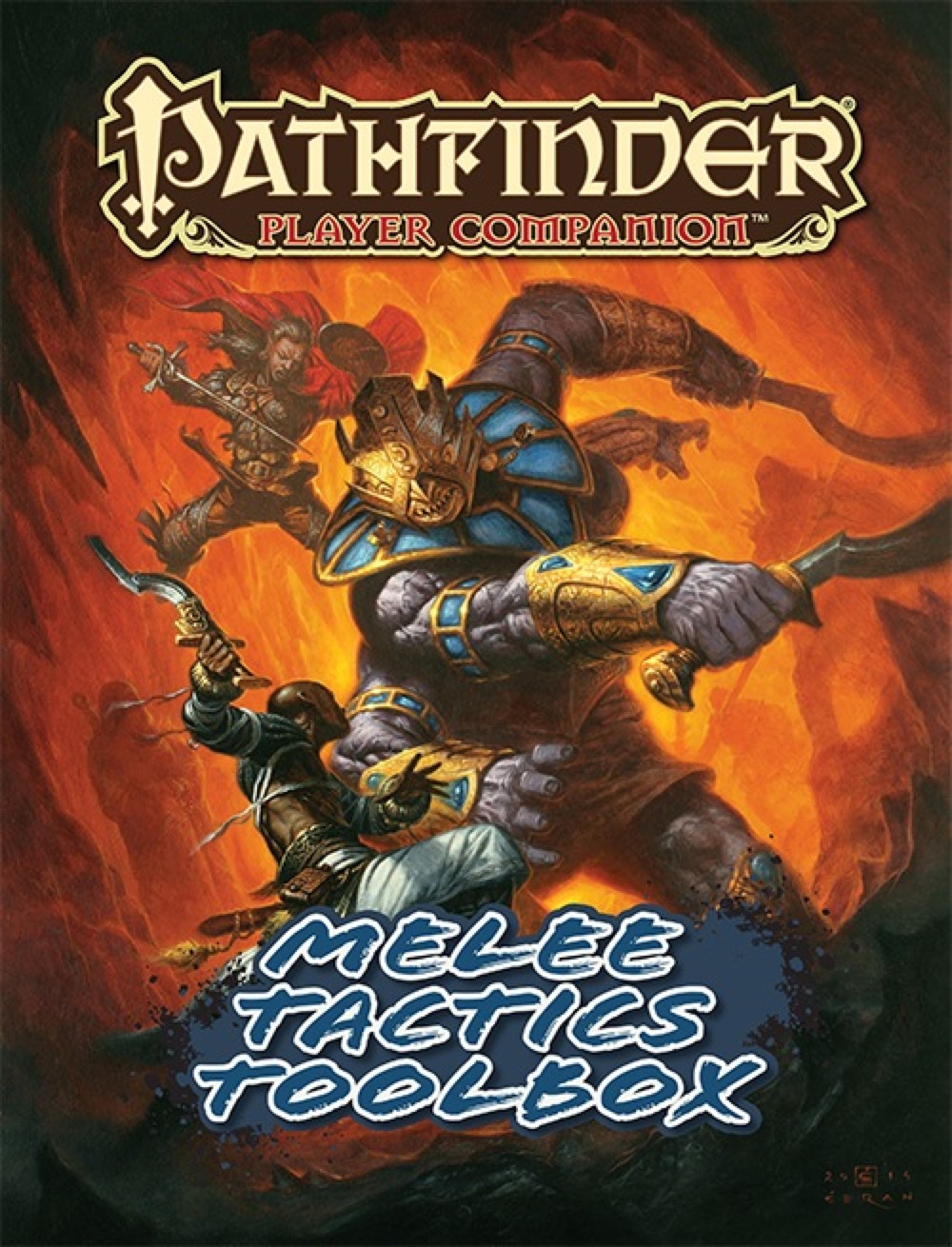
Melee Tactics Toolbox


The first thing I noticed upon opening Melee Tactics Toolbox is the inside front cover, containing a list of schools teaching mêlée tactics that can be found in the Inner Sea Region. Four schools are listed: the Aldori Academy, the Crusader War College, the Grand Coliseum, and the Tempering Hall. A bit of the Inner Sea map accompanies each description and shows the rough location of the school. This immediately made me a little better predisposed to the book, as it's not one I was particularly looking forward to. I was expecting something that wasn't going to particularly stand out, much like Ranged Tactics Toolbox, which this book is an obvious companion to. World flavour is something I really wish Ranged Tactics Toolbox had more of, so seeing that flavour right from the start in Melee Tactics Toolbox raised my hopes a little.

Turns out, there's not a whole lot more world flavour beyond this, but there is a bit more. Like Ranged Tactics Toolbox, Melee Tactics Toolbox is primarily a book of character options, this time focusing on mêlée combat. Like its companion, it doesn't actually spend a great deal of time on the tactics of its title, but does have scores of new feats, weapons, magic items, and more. Also like its companion, it seems to be desperately trying to create new things for something that doesn't really need any new things added to it. By itself or in conjunction with Ranged Tactics Toolbox, Melee Tactics Toolbox will likely be a useful resource for players, but in conjunction with the scores of other books out there, it will likely be mostly forgettable. It's not a bad book; it just doesn't really stand out.

February (and December/January) Round-Up Plus Pathfinder Humble Bundle


So it's been an interesting couple of months. A number of things, particularly family health issues, have meant that I've completed a lot less writing than I intended to, and I've fallen considerably behind schedule on getting caught up on all the reviews I need to do. However, the situation is improving and the frequency of reviews should improve along with it!

Since my last round-up, Doctor Who Series 9 came to an end with the amazing “Heaven Sent” and not-so-amazing “Hell Bent”. Then, just a couple weeks later, there was the 2015 Christmas special, “The Husbands of River Song”. During that time, I also wrote a review looking back on the entirety of Series 9. In that, I made mention of a planned retrospective on Clara as a companion and said to expect it in early January. Obviously, that hasn't happened yet, but I still intend to write it, and hope to have it up in the next week or so—definitely before the end of March. I'm also looking to get back to my Series 8 reviews by late March or early April.

In January, news came that Steven Moffat will be leaving Doctor Who after Series 10. In the wake of that news, there has been a lot of speculation on whether Peter Capaldi will be leaving as well and who might replace him. So far, however, there has been no actual announcement of his departure and I, personally, hope he sticks around for another year or two. Of course, we'll have to wait and see, but just because then-current David Tennant left when Russell T Davies left doesn't mean Peter Capaldi has to leave with Moffat.

Also in January, for a bit of fun, I posted this little 60's gem.

On New Year's Day, the new Sherlock special, The Abominable Bride, aired. I haven't reviewed it yet. I will though.

On the roleplaying side of things, since my last round-up, I've written reviews of We Be Goblins Free!, Andoran, Birthplace of Freedom, Familiar Folio, Occult Realms, Lost Treasures, and Ranged Tactics Toolbox. I also looked at the hardcover Pathfinder Unchained and completed the remaining instalments of the Iron Gods Adventure Path: Valley of the Brain Collectors, Palace of Fallen Stars, and The Divinity Drive. Be sure to check out any you haven't read. Coming up next will be Melee Tactics Toolbox and the Iron Gods Player's Guide.

In other Pathfinder news, until March 9, you can purchase a ton of Pathfinder books (including the Core Rulebook) through Humble Bundle. Over $350 worth of books are available for...whatever you want to pay. Some require a minimum amount to unlock, but as little as $25 will get you them all. They are all PDF copies of the books plus a physical copy of the Beginner Box (if you unlock it; postage not included). It's an absolutely amazing deal, and proceeds go to charity (Humble Bundle even gives you the option to choose which charity). They have apparently raised over $500 000 so far. A small warning: This deal has apparently been more popular than expected, resulting in Paizo's site being overwhelmed by extra traffic. Downloading your purchases might be a bit slow, but worth the wait.

Here's to a great March!